Saturday, October 26, 2013

Will Iran Lift Book Censorship?

Here is an interesting potential turn of events, not to be expected by the west.  And although I never write of political goings-on, I thought this of sufficient importance to include the material in my blog today. 
iranThe Iranian cultural minister Ali Jannati has said that the government will reconsider allowing books that had previously been censored in the country. According to a report in The Guardian, Jannati said that “books subjected to censorship or denied permission to be published in the past will be reviewed again.”
The move comes as a new president has taken power in Iran. Here is more from The Guardian: “The new move come under The minister’s words suggested an opening-up of the country’s publishing industry under new president Hassan Rouhani, who has already signalled his willingness to make changes by agreeing to the first presidential telephone conversation with the U.S. since the 1979 revolution.       
Under the former president Mahmoud Ahmadinejad, Iran censored many books including Tracy Chevalier’s Girl With a Pearl Earring and Dan Brown’s The Da Vinci Code.  
What do you think will be the outcome?  Please leave a comment on your thoughts about this all important human consideration.

Monday, October 21, 2013

Quriky Things Famous Authors Did as Regular Routines

Since the first vignette is about John le Carre, I will tell you a little thing that happened to Mr. le Carre and to me.  

46460While walking with friends in Hampstead, London, I saw an older gentleman and presumably his wife, walking toward us on the sidewalk.  As we met, I lost my footing and inadvertently pushed the man off the sidewalk and into the street.  After many apologies on my part and nothing but kindness on his, we all went on our way.  Our friend, who lived in the neighborhood, said, "You just pushed John le Carre into the street!"  All I can say is, 'What a nice fellow!'


 As an MI5 officer, le CarrĂ© spent his 90 minute train rides from Buckinghamshire to London penning his debut novel, Call for the Dead. Le CarrĂ© quipped, "The line has since been electrified, which is a great loss to literature." 

Instead of hopping in an actual tub, every morning Benjamin Franklin took what he called "tonic baths" in the open air of his bedroom-he'd shed his clothes and work naked, for up to an hour ...

Agatha Christie had two important demands for the renovation of her mansion. She informed her architect, "I want a big bath, and I need a ledge because I like to eat apples." Christie constructed her plots in a large Victorian tub, one bite at a time.
 Maya Angelou writes in the isolation of a hotel room. To ensure there are no distractions, she requests that everything be removed from the walls. Her own essential tools, which she brings into the bare room, include yellow pads, a dictionary, a thesaurus and a Bible. She used to also bring sherry and an ashtray.
And perhaps the strangest of all:
Dame Edith Sitwell had a ritual of lying down before she set pen to paper. Rather than reclining on a bed or a couch, though, she chose to climb into an open coffin. In those morbidly tight quarters, the eccentric poet found inspiration for her work.
Celia Blue Johnson is the creative director of Slice, a Brooklyn-based nonprofit literary magazine. She is the author of several books, most recently, Odd Type Writers: From Joyce and Dickens to Wharton and Welty, the Obsessive Habits and Quirky Techniques of Great Authors.

Tuesday, October 15, 2013

Thank You, Literary Classics International Book Awards!

It is always exciting and fulfilling to win a book award after one's hard work in writing it.  I am truly happy and honored to announce that my children's book, Katrina and Winter:  Partners in Courage, (Guardian Angel Publishing) has been chosen for two awards by the prestigious Children's Classics Awards.

Katrina and Winter won the Literary Classics Seal of Approval, 2013.  The second is s Literary Classics Silver Award.  I am so delighted to accept them both.

What are the Children's Classics Awards?  In their own words: 

At Literary Classics, we believe literature is a critical component in the development of young minds.  Through well-crafted literature we foster creative thinking, enhance word recognition, improve cognitive skills and help achieve a greater understanding of people and the world around us.


At Literary Classics, we provide book reviews for children's and young adult books.  We offer an international book award program, and we endorse exceptional literature through our Literary Classics Seal of Approval. 

 
On behalf of Katrina Simpkins and Winter, the dolphin, of course, I am pleased to accept these two awards.  It is my hope many of you will read the book.  Katrina and Winter are truly inspirational on their own.  As a team, they are unstoppable!


Thursday, October 10, 2013

100 Great Kids' Books from the Past 100 Years


Authors Judy Blume and Eric Carle were on hand to celebrate New York City Public Library's list of 100 great kids'books.  

The list includes picture books for preschoolers as well as books for older readers like "The Hobbit" and "Harry Potter and the Sorcerer's Stone."  Others included in the list are:
"The Cat in the Hat," "Pippi Longstocking" and "Where the Wild Things Are."  The exhibit on children's literature at the library's main building in midtown Manhattan.  Blume and Carle joined librarians for a reading and panel discussion.
"Viewed over time, children's books are the collected memory of our hopes and dreams," said moderator Leonard Marcus, a book critic and the curator of the exhibit. "They are the message in a bottle that each generation tosses out to the next generation in the hope that it may wash ashore and be read and be taken to heart."
Blume, whose "Tales of a Fourth Grade Nothing" is on the list, said that when she was in the fourth grade herself she always had stories in her head.  Of that, she said:

But I never told anybody about them because I thought if I did they would think I was weird.
Since Blume began publishing in the 1970s, many of her books dealing with subjects like racism, divorce and sexuality have been banned by authorities who considered the topics inappropriate for children.
  
Books that are loved by children are often the books that scare adults.
Carle made the library's list with "The Very Hungry Caterpillar," his 1969 picture book about a voracious bug that becomes a butterfly. He said he created the caterpillar by folding and manipulating paper; he first thought of the character as a bookworm, Willie the Worm.
And I had this wonderful editor and she didn't like the worm so much.
Carle read his brand-new book, "Friends," about a boy who swims across a river and climbs a mountain in search of his friend.

Monday, October 7, 2013

Who Is Your Favorite Nobel Prize Winning Author?

Who is your favorite Nobel Prize winning author? The Nobel Prize for Literature website listed the “Most Popular Literature Laureates” on its website, and some of the names might surprise you.

Book Review-Nobel PrizeThis blogger's favorite winner is Winston Churchill's The Second World War, given in 1953.  Run down the list to see if there is one that draws you.
Since 1901, 105 Nobel Prizes in Literature have been awarded to 109 laureates. The average age of these laureates is 64 years old and only 12 women have received the prestigious prize.
Below, is the the entire list–complete with links to their biographies at the Nobel Prize website.

YearAuthor Famous for
1901Sully PrudhommeParnassian poetry
1902Theodor MommsenHistory of Rome
1903Bjørnstjerne Bjørnson Synnöve Solbakken
1904José EchegarayEl gran Galeoto
1904 FrĂ©dĂ©ric Mistral MIRĂˆIO
1905Henryk SienkiewiczQuo vadis
1906 Giosuè CarducciRime Nuove (New Rhymes) , Odi Barbare (Barbarian Odes)
1907 Rudyard Kipling Jungle Books
1908Rudolf Eucken The Problem of Human Life as Viewed by the Great Thinkers
1909 Selma LagerlöfThe Wonderful Adventures of Nils
1910Paul Heyse Children of the World
1911Maurice MaeterlinckThe Blue Bird
1912 Gerhart HauptmannDie Weber
1913 Rabindranath Tagore Gitanjali
1915 Romain Rolland Le ThĂ©Ă¢tre du peuple
1916 Verner von Heidenstam Karolinerna
1917 Henrik Pontoppidan Lucky Peter
1917 Karl GjellerupThe German Student
1919 Carl Spitteler Olympian Spring
1920 Knut HamsunGrowth of the Soil
1921 Anatole FranceThe Crime of Sylvestre Bonnard
1922 Jacinto Benavente The Bonds of Interest
1923William Butler Yeats The Wild Swans at Coole
1924 Wladyslaw Reymont Chłopi
1925 George Bernard Shaw Arms and the Man
1926 Grazia Deledda Anime Oneste
1927 Henri Bergson The Two Sources of Morality and Religion
1928Sigrid Undset Kristin Lavransdatter
1929 Thomas Mann Buddenbrooks
1930 Sinclair Lewis Arrowsmith
1931 Erik Axel Karlfeldt Arcadia Borealis
1932 John Galsworthy The Forsyte Saga
1933 Ivan Bunin The Gentleman from San Francisco
1934 Luigi Pirandello Lumie di Sicilia
1936 Eugene O'Neill Anna Christie
1937 Roger Martin du Gard Les Thibault
1938 Pearl Buck The Good Earth
1939 Frans Eemil SillanpääPeople in the Summer Night
1944 Johannes V. Jensen Poems 1906
1945 Gabriela Mistral Piececitos de Niño
1946 Hermann Hesse Siddhartha
1947 André GideFruits of the Earth
1948T.S. EliotThe Waste Land
1949William FaulknerThe Sound and the Fury
1950Bertrand Russell A History of Western Philosophy
1951Pär LagerkvistFruits of the Earth
1952 François Mauriac Thérèse
1953Winston ChurchillThe Second World War
1954 Ernest HemingwayThe Old Man and the Sea
1955 HalldĂ³r Laxness Independent People
1956Juan RamĂ³n JimĂ©nez Platero and I
1957 Albert CamusThe Plague
1958Boris Pasternak Doctor Zhivago
1959Salvatore QuasimodoGiorno Dopo Giorno
1960 Saint-John PerseExile
1961 Ivo Andric Anxieties
1962 John Steinbeck The Grapes of Wrath
1963 Giorgos Seferis Turning Point
1964 Jean-Paul Sartre Nausea
1965 Mikhail SholokhovAnd Quiet Flows the Don
1966 Nelly Sachs Eli: A Mystery Play of the Sufferings of Israel
1966 Shmuel Agnon The Bridal Canopy
1967 Miguel Angel AsturiasThe President
1968 Yasunari Kawabata Snow Country
1969Samuel Beckett Waiting for Godot
1970 Alexandr Solzhenitsyn One Day in the Life of Ivan Denisovich
1971 Pablo Neruda Canto General
1972 Heinrich Böll Billiards at Half-past Nine
1973 Patrick White Riders in the Chariot
1974Harry Martinson Aniara
1974 Eyvind Johnson Here is Your Life!
1975 Eugenio Montale Occasions
1976 Saul Bellow The Adventures of Augie March
1977 Vicente Aleixandre Shadow of Paradise
1978 Isaac Bashevis Singer Gimpel the Fool
1979 Odysseus Elytis Worthy It Is
1980 Czeslaw Milosz The Captive Mind
1981 Elias Canetti Crowds and Power
1982 Gabriel GarcĂ­a MĂ¡rquez One Hundred Years of Solitude
1983 William GoldingLord of the Flies
1984 Jaroslav Seifert The Plague Column
1985 Claude Simon The Flanders Road
1986 Wole Soyinka The Bacchae of Euripides
1987 Joseph BrodskyLove Song
1988 Naguib Mahfouz Chitchat on the Nile
1989 Camilo José Cela The Hive
1990 Octavio Paz Collected Poems, 1957–1987
1991 Nadine Gordimer The Conservationist
1992 Derek WalcottOmeros
1993 Toni Morrison Beloved
1994 Kenzaburo OeA Personal Matter
1995 Seamus Heaney The Spirit Level
1996 Wislawa Szymborska Some Like Poetry
1997 Dario Fo Archangels Don't Play Pinball
1998 José SaramagoBaltasar and Blimunda
1999GĂ¼nter Grass The Tin Drum
2000 Gao Xingjian One Man's Bible
2001 V. S. NaipaulIn a Free State
2002 Imre KertészFatelessness
2003 J. M. Coetzee Disgrace
2004 Elfriede JelinekThe Piano Teacher
2005 Harold Pinter The Birthday Party
2006 Orhan Pamuk The Black Book
2007 Doris Lessing The Grass is Singing
2008 Jean-Marie Gustave Le ClézioThe Interrogation
2009 Herta MĂ¼llerThe Land of Green Plums

*This information is also provided at GalleyCat by Jason Boog.

Friday, October 4, 2013

47% of Americans Participated in Some Type of the Arts Last Year


Here is an interesting slice of across the board arts consumption of adult in the U.S. in 2012.  You may be surprised.
neachart
The National Endowment for the Arts released its annual Public Participation in the Arts report, revealing that 54 percent of adults read books that were not required for work or school last year. Are you surprised?
Beyond that figure, 45 percent of adults read novels or short stories. As you can see by the chart embedded above, electronic media was the dominant medium for art consumption.
Adults are included in this category if they did at least one of the following types of reading in the preceding 12 months: Books not required for work or school (54 percent of adults) Literary reading (47 percent of adults). Types of literature may have included: Novels or short stories (45 percent of adults) Poetry (7 percent) Plays (3 percent) … adults’ rates of literary reading (novels or short stories, poetry, and plays) dropped back to 2002 levels (from 50 percent in 2008 to 47 percent in 20.)

Sunday, September 29, 2013

Guardian Angel Publishing Champions Multi-Cultural Books for Kids

Several weeks ago, I wrote a blog post on Guardian Angel Publishing and protagonists of color.  The publisher, Lynda Burch and many of the authors are dedicated to this policy. 

Thank You, Author/Artist Margot Finke
In this post, I am  showcasing authors who write books featuring multicultural children as protagonists.  I hope you will find them inspiring and useful for your young ones, classroom or library.

A list, alphabetically by author is as follows:  (Please click on the author's name for all pertinent information.)

Barbara Arbo   Scripture for Kids 

aboutA book packed with Scripture promises along with color visuals to apply God's word to their lives.


about
Penelope Cole     Magical Mea

Matthew's little sister is a trickster.  Mea got her magic when Matthew lost his.  Matthew tries to guide Mea to use hers for good.  But she wants to do it her way.  Will she get in trouble?

In the words of Lynda S. Burch, publisher of Guardian Angel Publishing:

Guardian Angel is proud to offer a mixed variety of children's books for all ethnicities and also multiple language platforms.  We have been aware of the needs for a broader base of stories for kids from around the globe and in our own backyards and have extended our efforts to produce quality children's books that kids can identify with-no matter their skin color or ethnicity.  Many of our books include multicultural characters that gently teach acceptance for all children of the world.  We believe in cultural diversity is a literary portal from which we can embrace our global community with our books.

Janet Ann Collins           Signs of Trouble


Children with learning disabilities get separated from their Special Education class on a field trip and use what they’ve learned to get reunited with them. The included activities can help children learn safety rules, understanding of people with special needs, basic reading skills, and creative writing skills.  They, of course, are the heroes!


Andi Houdak    Stop That  Pudding!


Passing up fruits and veggies for an afternoon snack, Kevin grabs a chocolate pudding and heads out the door. His adventure begins as he opens up his pudding cup and watches it spring to life! Find out if Kevin and his spoon are fast enough to catch his quick snack!

Mary Jean Kelso       The Christmas Angel


aboutMelissa is a young girl who moves with her family to Oregon via The Oregon Trail. She has been allowed to bring one prized possession and she struggles to see that the porcelain angel that has topped the family Christmas tree makes the journey safely. This adventure on the Oregon Trail has added educational tools including a map, lists of supplies, info on the trail, links to sites and games about the Oregon trail. Five extra pages of activities.

Donna McDine     Hockey Agony

aboutPeer Pressure and Honesty many times go hand-in-hand. What is Larry to do when his teammate asks him to cheat when he is given the responsibility to run the clock during the big hockey game? Outwardly, it may seem he will follow suit, but his conscious tells him otherwise at the moment of truth.

about

A tiny burro shows up at a little boy’s house and becomes a real asset to the family. The day he disappears, they never expect to see him again until he prances in one dark spooky night.  Ms. Vela's books are written in Spanish as well as English.

 
Colleen L. Reece         God Loves You Whoever You Are


Young or old, big or small, fat or thin, God loves each of us. We may have blue eyes, or brown eyes, gold, green or grey. Our skin may be colored any shade. God loves  us.


Cynthia Reeg     Gifts from God 


Gifts from God celebrates God’s loving gifts to each child. Glorious color photographs highlighting children and nature accompany each gift. Every double-page spread has an easy reader sentence on the right and a scripture quotation on the left making this an enjoyable and uplifting book for both children and adults.


 Kristen Zajek       Ebeneezer's Cousin


Maria Jimenez and her dad share many things including a passion for going to see the monkeys at their local primate sanctuary.  But when Maria’s father returns home from military service with an injury, how will she find a way to help him recapture his spirit and independence?


Thursday, September 26, 2013

Children's and YA eBook Revenues Down Nearly Forty Six Percent


It is amazing how one book or a series or the film such as The Hunger Games is able to drive the statistics of a whole industry.  Have a look at the stats below.  It is interesting stuff.

According to the Association of American Publishers (AAP) StatShot report for the first half of 2013, publishers saw total trade sales take a six percent drop.
YA and children’s publishing saw steep declines as sales from 2012′s The Hunger Games blockbuster movie recede. Children’s and YA hardcover sales dipped nearly 32 percent and eBook sales dipped nearly 46 percent in the same category.
The AAP chart embedded above shows how the different young adult and children’s categories were affected from January to June 2013.
This dramatic readjustment in the Children’s/YA category is slowing, however. Compared to the same period last year, children’s and YA declined 22 percent. In June, sales only declined 8.8 percent. Catching Fire comes out in November, so we may see some big sales once again for the sequel.
Below, we’ve collected the overall totals for all trade formats. This Stat Shot report used data collected from 1,196 publishers.

Monday, September 23, 2013

New Adult FictionTargets Readers From 18 to 25


What in the world is the new genre of books called New Adult?  Let's talk about it. 

 The label was first used in 2009 when St. Martin’s Press hosted a contest looking for stories that could be marketed to both YA readers and adult readers. The contest described for new adult fiction as books “with protagonists who are slightly older than YA and can appeal to an adult audience.”  That audience is the 18 to 25 year old group.


Actually, they're crossover books that older readers favor as well. Because they're "new adults," the characters are dealing with adult issues for the first time: first job, first home, first relationship. Therefore, New Adult fiction focuses on young people, college age, late teens to early twenties, transitioning into the modern adult world.

Some examples? 

If You Leave (Beautifully Broken, #2) Gayle Forman's Just One Day and Just One Year are companion books that track the same event and its consequences from two points of view. 

Maureen Johnson's The Madness Underneath (Putnam) is the second in the Shades of London series.  

Of course, the question on everyone's lips is, "Isn't there lots of sex in these books?"  The answer is, "Yes, some.  But that's not all there is to them."  This genre reflects young people of today and, I suspect, of yesterday as well.  After all, human nature hasn't changed in millennia.  What has changed are expectations of young people.  But that is a different topic for a different day.


more here: http://www.charlotteobserver.com/2013/08/23/4258598/new-adult-fiction-targets-readers.html#storylink=cpy

Wednesday, September 18, 2013

Bridge Books Transport Kids into New Adventures


It’s a big leap from beginning readers to chapter books for most kids, and it’s often helpful to point them to “bridge” books — shorter books with shorter chapters, larger type and more illustrations than is the case with most children’s novels.  
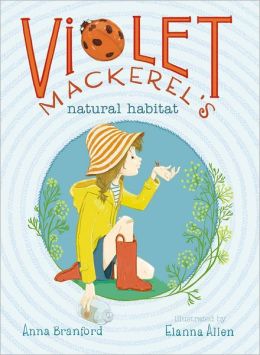
Violet Mackerel's Natural HabitatSeries books can be invaluable as bridge books because they are short, filled with action and illustrations, and allow young readers to become invested in specific characters.  Recently, there’s been an explosion in the number of bridge books as publishers seek to fill this niche. Here’s a look at some of these new books:

■Seven-year-old Violet Mackerel is the youngest in her family, and lately that hasn’t been much fun.  Her older brother Dylan is “in a phase” and her even-older sister Nicola is always grumpy, telling Violet to “buzz off.”

Yet it’s Violet who eventually comes up with the perfect solution to Nicola’s problem of what to do for her science-fair project in “Violet Mackerel’s Natural Habitat” (Atheneum/Simon & Schuster, $15.99 hardcover, $5.99 paperback, ages 6-9).
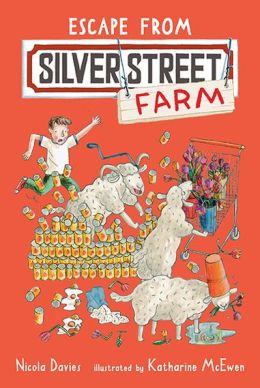
Escape from Silver Street FarmAuthor Anna Branford does a marvelous job of conveying the world through Violet’s eyes. Young readers, even those who aren’t the youngest in their families, will readily identify with her travails and triumphs.

■Three children named Gemma, Meera and Karl may live in the city, but they are true farm-animal lovers. With help from a farm lover named Flora MacDonald, they’ve found a way to create the Silver Street Farm in their city by taking over an abandoned railway station that has enough surrounding land for grazing animals.

Yet, things don’t necessarily go smoothly when you mix city and country, as author Nicola Davies shows in “Escape From Silver Street Farm” (Candlewick Press, $12.99, ages 7-10). In this latest book in the “Silver Street Farm” series, the three children and Flora cope with runaway turkeys and sheep, and end up with some surprising discoveries.
Davies clearly is a farm lover herself and so makes it totally plausible that three city kids would be so besotted with cows, sheep, turkeys, etc., that they would come up with a way to open an urban farm.

■ Claude is a hound dog with style. He wears a red beret, a red sweater and has a best friend — Sir Bobblysock — a red-and-white-striped sock and who gets around on his own power.

Together, these good friends have some hilarious adventures in “Claude in the City” (Peachtree, $12.95, ages 5-8). Author/illustrator Alex T. Smith readily convinces young readers to suspend their disbelief and just enjoy the wacky adventures of a black-and-white hound dog accompanied by his best friend, a sock.
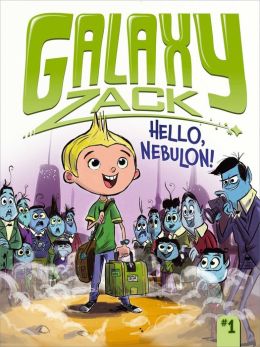
Hello, Nebulon! (Galaxy Zack Series #1)The book’s text is minimalist, letting the illustrations convey much of the action. It’s a great combination that will keep young readers turning the pages and awaiting Claude’s next adventure, “Claude at the Circus,” which is scheduled to be published this fall.

■It’s 2120, and Zack Nelson and his family have moved from Earth to planet Nebulon. Zack isn’t exactly thrilled about leaving his friends behind on Earth, but he has to admit that there’s some cool things about NebulonThe robot serves Zack exactly what he wants to eat and makes sure he’s up in time for school.

Saturday, September 14, 2013

Pleasure Reading Significantly Improves a Child’s School Performance.


Here is an interesting study from GalleyCat, written by Jason Boorg.
prgrsvimghttp://ts1.mm.bing.net/th?id=H.4954829999900326&w=207&h=207&c=8&pid=3.1&qlt=90&rm=2The University of London’s Institute of Education Children has released a study showing that reading for pleasure can “significantly” improve a child’s school performance.
Most dramatically, the researchers ruled that “reading for pleasure was found to be more important for children’s cognitive development between ages 10 and 16 than their parents’ level of education.”
Dr. Alice Sullivan and Matt Brown led the study, examining the performance of 6,000 young people in the 1970 British Cohort Study. They measured test score performance at five, 10 and 16 years old.
Reading for pleasure improved math, spelling and vocabulary performance in children between 10 and 16-years-old–comparing their progress to kids who don’t read regularly. Here’s more from the release:
The researchers, who are based in the IOE’s Centre for Longitudinal Studies, compared children from the same social backgrounds who had achieved the same test scores as each other both at ages 5 and 10.
They discovered that those who read books often at age 10 and more than once a week at age 16 gained higher results in all three tests at age 16 than those who read less regularly. The combined effect on children’s progress of reading books often, going to the library regularly and reading newspapers at 16 was four times greater than the advantage children gained from having a parent with a degree.
 Children who were read to regularly by their parents at age 5 performed better in all three tests at age 16 than those who were not helped in this way.

Tuesday, September 10, 2013

New Guardian Angel Publishing Books for Early Autumn

It is always my pleasure to feature new books from Guardian Angel Publishing.  Today is no exception.  Please have a look at the offerings.  You just may want one or more of them!

Andy & Spirit in Search & Rescue Academic Wings hardcover edition
aboutby Mary Jean Kelso, art KC Snider

Great Gobs of Gustation: The Sum of Our Parts  Book 8 Academic Wings
by Bill Kirk, art by Eugene Ruble
A rhyme which describes the sense of taste and how it works to help you tell what you like to eat and what you don’t. Book 8 of the Sum of our Parts anatomical educational series

Just Too Little  Littlest Angel
by Judith J. Miller, art Sonal Panse
At her grandparents farm Pam is too little to help with the chores.

Michael’s Safari Littlest Angel
by JennaKay Francis art by Craig Howarth
Michael takes an imaginary journey.

The New Puppy Animals & Pets
by Raelene Hall art by Kevin Collier, Gisele LaBlanc
After a day of fun

 These books may be purchased from Guardian Angel Publishing and Amazon.