Tuesday, February 25, 2014

The Excitement of Using Middle Grade Novels in the Classroom

Next month I will present once again at the Illinois Reading Council Conference.  The conference is held from March 13-15.  It is always a stellar coming together of teachers, editors, authors and others interested in the reading welfare of children  I am honored to have been part of it for the past four years.


My presentation this year is titled:  Using Middle Grade Books in the Classroom:  A Bridge to Growth, Self-Awareness, and Maturity.

This has been a fun presentation to do, along with my power point.  I have defined middle school kids for this post with some authority, as I taught them for some ten years.

The first bridge I use is Growth.  In what ways do middle grade students grow?  Here are a few examples:

A beginning of the end of childhood
A stronger sense of self
Early romantic fantasies for girls and boys
Kids moving in packs defined by gender
Bullying and being bullied for some boys  (Girls, too.)

Using trade novels to address this partial list of events in a middle schooler's life, is an exceptional aid for teachers of this special and magical time of childhood.


As Stanley Milgrim observed:

Crossing over the line from childhood to adolescence is difficult because the line is not clear and there are inherent risks involved.  It is an emotional leap as well as a physical one, and maintaining a balanced sense of self becomes increasingly difficult.

It is a pleasure to work with teachers of middle school kids at the conference.  It is my hope they will enjoy and profit from my presentation.             


Friday, February 21, 2014

New Program in the US Aids Teaching Love of Reading to Arab Kindergarten Children


A new national program, Maktabat al-Fanoos (“Lantern Library”), encourages pre-school children in Arab communities to read.

A Kg teacher near Hadera reads
Sumsum the Mouse’ in Baka al-Gharbiya, 

The program, geared towards three- to five-year-olds, aims to instill a love of reading from an early age and provide children the opportunity to enjoy reading books together with their teachers and parents.

During the school year, more than 45,000 children in 1,750 kindergartens will receive four children’s books each, one per month, as a gift to bring home and read with their families. The Education Ministry is running the program in collaboration with the Massachusetts-based Harold Grinspoon Foundation and the California-based Price Family Charitable Fund. According to Israeli Education Minister Shai Piron:

I am proud that as of today, Arab society in Israel can also enjoy the highest quality program to encourage children to read, and instill in them a love of books, which is key to future success in school.


Teachers will engage their students in fun and educational activities surrounding the books’ stories, and after exploring the books in school, children will receive copies for their home libraries. The last pages of each book will include suggestions to parents for joint activities and discussions.


“In the Arabic sector there are a lot of homes that don’t have books, and through this program, children will receive different books so that over a period of two to three years, from pre-school and through kindergarten, they can build a nice collection,” Vromen said.


The first book the children will receive, Sumsum (“Sesame”) the Mouse, tells the story of a field mouse who tends to daydream while the other mice work and gather food for the winter. When the cold finally arrives and Sumsum’s friends are bored and unhappy, the little mouse shares his colorful stories and lifts their spirits of his friends. The book allows teachers and parents to stimulate a discussion on the different kinds of personal contributions toward a joint effort.

This year the program will encompass all kindergartens and special education state schools in the Arab, Beduin and Druse communities as well as some pre-schools. Teachers will receive suggestions for creative activities surrounding the book, including integrating the stories into games, movements, discussions and artworks.

A committee of experts on education and children’s literature selected the four books. Each deals with topics closely related to the world of children and aims to stimulate discussions on universal values and to enhance the readers’ Arabic vocabulary.

Sunday, February 16, 2014

Before They Were Famous: The Strangest Jobs of Six Literary Luminaries


Everybody has to make a living, even writers.  Here are some interesting jobs by famous authors before they became famous.  I am convinced, though, that each of these people gained insight about the human condition while fulfilling their jobs. 

Kurt Vonnegut managed America’s first Saab dealership in Cape Cod during the late 1950s, a job he joked about in a 2004 essay: “I now believe my failure as a dealer so long ago explains what would otherwise remain a deep mystery: Why the Swedes have never given me a Nobel Prize for Literature.”
 John Steinbeck took on a range of odd occupations before 
earning enough to work as a full-time writer. Among his day jobs: apprentice painter, fruit picker, estate caretaker and Madison Square Garden construction worker.
 Stephen King served as a janitor for a high school while struggling to get his fiction published. His time wheeling the cart through the halls inspired him to write the opening girls’ locker room scene in Carrie, which would become his breakout novel.
 Harper Lee worked as a reservation clerk for Eastern Air Lines for more than eight years, writing stories in her spare time. This all changed when a friend offered her a Christmas gift of one year’s wages, with the note, “You have one year off from your job to write whatever you please.” She wrote the first draft of To Kill a Mockingbird within the year.
 Before his writing career took off, William Faulkner also worked for the Postal Service, as postmaster at the University of Mississippi. In his resignation note, he neatly summarized the struggle of art and commerce faced by many authors: “As long as I live under the capitalist system I expect to have my life influenced by the demands of moneyed people. But I will be damned if I propose to be at the beck and call of every itinerant scoundrel who has two cents to invest in a postage stamp. This, sir, is my resignation.”
 T.S. Eliot worked as a banker, serving as a clerk for Lloyds Bank of London for eight years. The job must have been a bummer—he composed passages of The Waste Land while walking to work each da Sometimes, an odd job can actually lead to opportunity. Poet Vachel Lindsay was interrupted as he dined at a hotel restaurant in Washington, D.C., by a busboy who handed him some sheets of poetry. At first irritated by the young man, Lindsay was quickly impressed by the writing. When he asked, “Who wrote this?” the busboy replied, “I did.” Langston Hughes was about to get his big break

Tuesday, February 11, 2014

Lonely Planet Launches New World Search Children's Series


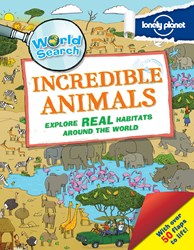
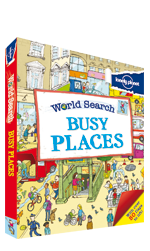
Lonely Planet, the world’s leading travel authority, has published three brand new and highly visual books for children to inspire curiosity about exploring the world. Lonely Planet’s World Search series contains hands-on books for little adventurers aged 3 and up: World Search: Amazing Jobs, World Search: Incredible Animals and World Search: Busy Places.

With Lonely Planet’s World Search series, kids can travel the world in search of the weird, wonderful and sometimes plain silly things that happen all over the globe. From animals and cities to the cool jobs people do, there’s plenty for them to look for and find. They can hunt amazing treasure and spot some awesome objects all over the world without ever leaving home.

These fun titles contain over 50 sturdy, easy-to-lift flaps so that kids can see what’s happening inside the amazing landscapes. With lots of detailed drawings to keep young ones engrossed, World Search is perfect for airplanes, road trips or quiet time at home.
World Search: Amazing Jobs
World Search: Amazing Jobs takes kids in- search of the most amazing jobs in the world, including being a stuntman on a Bollywood film set, a park ranger in Yellowstone National Park and a Royal Flying Doctor in the Australian Outback.

World Search: Incredible Animals shows incredible animals in their habitats around the world, including Antarctica (polar), Red Sea (coral reef), Serengeti (grasslands) and the Indian jungle (rainforest).

Not For Parents: World Search - Busy PlacesWorld Search: Busy Places is a tour through some of the busiest places in the world, including Rio’s Copacabana beach, New York City, London’s Heathrow Airport and Paris streets in search of hidden items.

About the Books:
World Search: Amazing Jobs
Published by Lonely Planet
ISBN: 9781743219201
16 pages, $14.99, full color, 11”x8.5”, board
February 2014
World Search: Incredible Animals
Published by Lonely Planet
ISBN: 9781743219225
16 pages, $14.99, full color, 11”x8.5”, board
February 2014
                                         World Search: Busy Places
                                         Published by Lonely Planet
                                         ISBN: 9781743219188
                                         16 pages, $14.99, full color, 11”x8.5”, board
                                         February 2014

Saturday, February 8, 2014

A Lovely Offering of Books from Guardian Angel Publishing


Happy New Year from the GAP family! 
This month’s theme is Weather Wonders. GAK, our very own Angel Gecko has a special feature in this month’s issue titled, “Tsunami Fog on the Beach.” Don’t miss it.
Robert Niven provides this month’s poem, “A Sudden Storm,” and short stories come to you from Arthur Carey, Carol Thompson, and Irene S. Roth.
We have two weather-related non-fiction articles this month, and as a special treat, our Editor-in-Chief, Mary Sue Roberts, provides this month’s Parent Teacher Article, “Down on the Windmill Farm.” This article includes a neat paper windmill activity.
To read this month’s issue, please visit us online at http://www.guardian-angel-kids.com/ You’ll also be able to access all our past e-Zine issues there.
And below are three more you may enjoy this month.  Do notice that there are two offerings about Australia, each from a different author.


Monday, February 3, 2014

What in the World do You Authors Do All Day?


I am asked this question more times that one could imagine.  For those of us who write full-time, the answer is simple and complex:  We work all day long!

My day has become, by fiat really, divided into three segments.  The first begins about 6:15 in the morning. Still dark.  House quiet.  Coffee brewing.  Puppy ready to jump into my lap for a hard day’s writing.

My attention turns to housekeeping issues.  Emails from two accounts, facebook, Twitter, Google Circles and my blog. Several years ago, none of this existed for me but email.  Today social networking has big teeth and is crucial to an author’s professional life.  If I’m lucky and efficient, all this can be finished by around 8 AM—unless it’s a gym day, when things get pushed back by an hour.

The second segment of time focuses on actual writing.  I am best at “being an author” if I've warmed up with other tasks but am not too tired.  This is when being in the flow occurs.  When nothing is in my mind but the story at hand.  When I am squarely in my protagonist’s (or antagonist’s) head.  When nothing else matters but moving the story from here to there.  What a good time of day it is when the magic works.  Sometimes it doesn’t.  Mercifully, most of the time it does.

The third part of my professional day is decidedly not my favorite, and sometimes I skip it.  That would be marketing.  There was a time not long ago when authors didn’t have to do such things.  Not anymore!  Today one must talk with bookstores, visit schools (which actually I love), do signings at various locales (fun, too, come to think of it).  Hmm.  Maybe I dislike the idea more than doing it…

The evenings will find me with my laptop in front of the TV, which I usually zone out.  It’s then that I’ll be sure my next blog is ready to post later that evening, my calendar is up to date and coffee’s ready to brew.  Everything at the ready for 6:15, quiet, coffee, puppy…You get the drift.

I can be brought out of the flow at:


Web Site:  http://www.nancystewartbooks.com 
Blog Site:  
http://www.nancystewartbooks.blogspot.com
 Twitter:   
 https://twitter.com/#!/stewartnancy                                                                                          Facebook: 
https://www.facebook.com/nancy.rosenthalstewart

Thursday, January 30, 2014

So You Think You'll Write a Book?

So you think you'll write a book. Okay. It's a good aspiration. I have but one modest suggestion at the outset: Be sure that's what you really want to do, as writing that book can be bad for your health--physically and emotionally--if you're not ready or willing to do what it takes.

What does it take? From my viewpoint, it takes the perseverance of a marathon runner, the patience of a saint and the perspective of an octogenarian at least.

First, let's get an idea. You know, that new slant, brilliant twist, blockbuster worthy, light bulb busting aha?
Now comes the research. Let's see if your topic's been done before. No? Great! Let's get on with the real research. Get those stats correct. Be sure the geography is right. Don't make a mistake with history, for heaven's sake.

 : Closeup portrait of a latin businesswoman thinking while sitting at desk isolated on white background Stock PhotoGot all that in place? Fantastic! Now it's time to wait for your muse to visit. Did I mention, wait? Oh, yes. This is a being that delights in calling the shots, usually later rather than sooner. But finally, she's come calling to accompany you through the morass of story building.

You settle in for a lovely literary liaison with her. And things go so well! That first draft of your manuscript is finished. You are so proud. So happy. So fulfilled.

Then it's time to visit your critique group. Didn't I mention your critique group? Silly me. You must have one. No, no, no to writing in a vacuum. But not to worry. You have produced a masterpiece, and everyone there will sing your praises and cast literary lilies at your feet.

Yeah. Right. They tear it to shreds. Nothing left but your title, and half of them hated that. They say things like, "What point of view? You don't have a point of view." Or perhaps, "These characters are so shallow, I can see right through them." You know. Helpful comments.

Home you slog in a huff, manuscript still too hot to handle from all the vitriol spewed upon it.
Next morning, you take up your quill, open the hateful pages with your fellow authors' marks covering them--and learn! What do you know? Huh. Their ideas aren't half bad. And you summon your muse back and begin again.

Now emerges the fun part. What is it, you ask? Two words, with an article between: Agent or publisher. Research revisited. Yep. You must see who matches whom, as in: "Why did this agent reject my book? Yes, she's known for Romance Novels, but surely she cannot resist my concept book." Have another think about that...

But, hey, miracles still happen (think George Bailey), and a publisher wants your book. That's terrific. You're going to make millions and fast, too. Why, it'll only take--how long? Two years! I could be dead by then. What's that? It'll be published posthumously? Swell.


And so it goes. But, then again there's something wondrous, delicious, stupendous about writing that manuscript, polishing that manuscript, shining that manuscript that I would not miss for the world.

Sunday, January 26, 2014

The Reading Habits of Children Two to Ten in the United States


After posting such a gloomy forecast regarding teens' reading habits, I decided to share with you a happier piece concerning younger children's proclivity for reading in the United States.

Children ages 2-10 are reading an average of 40 minutes per day, spending 29 minutes reading print, 8 minutes reading on computers, and 5 minutes reading on digital platforms, according to a new report from The Joan Ganz Cooney Center called Learning at Home.

For the study, the organization spoke to more than 1500 parents of 2-10 year old's across the country. 

According to the report, 62 percent of these kids have access to eReaders or tablets, but only 31 percent actually use these devices because their parents want them to read print books.


And where does television come into play? TV dominates. The research revealed that  children spend an average of 42 minutes a day watching educational TV.

U.S. Children's Reading Habits-Ages Two to Ten

After posting such a gloomy forecast recently regarding teens' reading habits, I decided to share with you a happier piece concerning younger children's proclivity for reading in the United States.


While the ages mentioned in this post span a huge difference in cognition, on an average, children ages 2-10 are reading an average of 40 minutes per day, spending 29 minutes reading print, 8 minutes reading on computers, and 5 minutes reading on digital platforms, according to a new report from The Joan Ganz Cooney Center called Learning at Home.

For the study, the organization spoke to more than 1500 parents of 2-10 year old children across the country. According to the report, 62 percent of these kids have access to e readers or tablets, but only 31 percent actually use these devices, because their parents want them to read print books.


Reading is definitely an important part of a child’s day, TV dominates. The research revealed that  children spend an average of 42 minutes a day watching educational TV.

On this blog, I've published quite a few helpful tips to help keep kids' reading interests high.  At the risk of redundancy, I'll list a few of them again:

1.  Model reading in your home.  If reading is seen as valuable to parents, most children will value books as well.

2.  Have reading material available everywhere in your home.  If books are placed in favorite areas such as the family room, kids' bedrooms, etc., research has found they will be read more frequently.

3.  Place word signs around so that young children can "read the room,"a technique that is highly successful.

4.  Allow kids to pick out their own books (with some guidance from you) in bookstores.  If they feel ownership in their purchases, books are usually read cover to cover.

I hope this helps and gives you some good news about U.S. children's reading habits as well!

Thursday, January 23, 2014

Why Aren't More Teens Reading for Fun?

Here is some disturbing data from Nielson Book.  The question  to deal with is this:  Will the trend continue and what, if anything, can be done to reverse it?


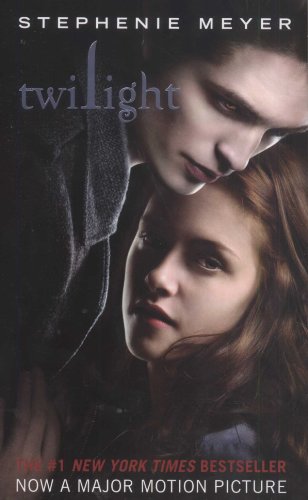
Twilight (The Twilight Saga, Book 1)More teens say they don’t read for fun today than any time in the past three years, according to new data from Nielsen Book, presented at Launch Kids at Digital Book World 2014 in New York recently.
According to the Nielsen data, 41% of teens now say they “don’t” read for fun. This number is up from 21% of teens who said that in the fall of 2011.
The survey was conducted among children aged 13 through 17.
The good news for book publishers, according to Nielsen’s Jonathan Nowell, who presented the data, is that the “children’s book market is resilient” and that it’s not that teens won’t resume their love of reading as digital books gain adoption — it’s just that they haven’t done it yet.

On a personal note, I have found in talking and working with young and older teens is this:  Outside of having to read literary assignments, they are reading blockbuster books, such as Hunger Games, 13 Reasons Why, and The Twilight Saga. 

Many teenagers tend to wait for the film to be released and would rather view the movie than read the book. A difficult trend to buck, it is what's occurring nationwide.

What can be done?  As parents, we can model and value reading for our teens.  While I realize we do not have as much influence as when they were younger (a totally natural state of affairs in the maturation process), we do have more than one might think.  

Take your teen to a bookstore on a regular basis.  There's nothing like the enticement of something new, and books can and should fit into that category.  

Listen to your teen when s/he talks about a book they're read or planning to read. Validation is a super tool in your box of parenting skills.

All you have to do is plan your strategy if your teen isn't reading for fun.  Good luck to you and your teen reader!


Sunday, January 19, 2014

What? Super Famous Authors Get Rejection Letters, Too?

At the annual Florida SCBWI Mid-Winter Conference held in Miami this past weekend, much was discussed concerning rejection letters, collected by most every author known to humanity.  This author certainly has had her share!  It seems fitting, then, to do a post on famous authors who have fallen prey to the same malady.  Have fun! 


GEORGE ORWELL

It seems Alfred Knopf didn’t always understand satire. Animal Farm, the famed dystopian allegory that later became an AP Reader standard and Retrospective Hugo Award winner, was turned down because it was “impossible to sell animal stories in the U.S.A.” A British publishing firm initially accepted and later rejected the work as well, arguing that “…the choice of pigs as the ruling caste will no doubt give offense to many people, and particularly to anyone who is a bit touchy, as undoubtedly the Russians are.”

 GERTRUDE STEIN

A shockingly nasty letter, I can only imagine how Ms. Stein reacted to this missive from Arthur C. Fifield with her manuscript for Three Lives: “Being only one, having only one pair of eyes, having only one time, having only one life, I cannot read your MS three or four times. Not even one time. Only one look, only one look is enough. Hardly one copy would sell here. Hardly one. Hardly one.” Twenty years later, Stein’sThe Autobiography of Alice B. Toklas became her one and only best-seller.

 STEPHEN KING

Most fans know that King’s big break came with Carrie, the story of a friendless, abused girl with secret telekinetic powers. Though one publishing house told him they were “not interested in science fiction which deals with negative utopias.  They do not sell,” Doubleday picked up the paperback rights to the novel and sold more than a million copies in its first year.

 WILLIAM GOLDING

Lord of the Flies was a favorite of so many high-school students, some publishers disagreed. One agent called the classic “an absurd and uninteresting fantasy which was rubbish and dull.” To date, the book has been required reading in high schools for nearly fifty years, 14.5 million copies have been sold, and Golding’s work has been adapted for film twice.

 MARY HIGGINS CLARK

Back in 1966, the young romance author was trying to sell a story she called “Journey Back to Love.” It didn’t go well, however; her submission to Redbook came back with a rejection from the editors, stating "We found the heroine as boring as her husband had." Ouch! The piece was eventually run as a two-part serial in an English magazine, and Mary Higgins Clark currently boasts forty-two bestselling novels.


Thursday, January 16, 2014

James Patterson on Creating Happy Readers

This blogger will have the pleasure of meeting James Patterson in March, 2014 when I present at the Illinois Reading Council Conference.  I am so delighted to have this opportunity.  Here is a post about him and all his accomplishments.


James Patterson didn’t plan to become a famous children’s author. He wasn’t even a big reader when he was a kid, despite having a teacher for a mom and a grandmother who was a librarian.
“I didn’t read as much as I should have,” he admits. “I read what I had to.”

It wasn’t until college, when he could read what he wanted, that he grew to love books.  “I just couldn’t get enough. And it got me scribbling,” he says. “I really liked scribbling. I like telling stories.”


Patterson’s interest in children’s books traces back to when his son, Jack, was 8. Like his dad, Jack was a good student but a so-so reader. That summer, Patterson and his wife made a deal with Jack: He could skip some chores if he agreed to read every day. “Aw, do I have to?” Patterson recalls Jack saying. Jack’s parents told him they would help find books he would really like. “By the end of the summer, Jack had read a dozen books, 10 of which he thought were terrific.” 

He stresses to kids why reading matters. If you don’t read well, he says, “you’re going to be lost in high school. And what are you going to do in life? Be a pro athlete? A rapper?”  While that might sound good to some kids, the chances of it happening are slim. So that makes reading – and doing well in school – a big deal. “Reading will give you a lot of choices,” Patterson says.

Who or what inspires James Patterson?

The author says he has “a very active imagination” and keeps a folder full of ideas. At any time, he has 45 to 55 projects going, including movie scripts.
“I study, study, study” before writing, he says. “Then I write seven days a week . . . for five, six or eight hours a day.”

To hold readers’ interest, “I pretend ther’s a person sitting across from me, and I don’t want him to leave until I’m finished with the story,” Patterson says.  Because he’s not superhuman, many of his books have co-authors. “I’ll have an idea and will write an outline” of 60 to 80 pages, including ideas for drawings. The co-author writes the first draft, which Patterson checks often “to keep it on track.” Then he buffs up the final version.

His children’s books aren’t sugar-coated. There are kids with disabilities, kids without parents, kids being bullied.  “Yes, there is a dose of reality” in them, he says. “I think that’s good. These books are not softballs. Readers love them because they show kids taking responsibility for their own actions, for their own lives, at a young age.”

Patterson, who is 66, shows no signs of slowing down. “I am a crazy person, totally crazy,” he says. “ I can’t stop writing, and I can’t stop reading.”

Saturday, January 11, 2014

In Beatrix Potter's Real Life Garden

 The vegetables in Beatrix Potter's children's have always come alive, appear fresh and ready to be harvested.  And did you know Ms. Potter was a gardener of gardeners, passionate about her land and what resided there--animals, vegetables, humans?  But what about those cuddly, adorable bunnies?         
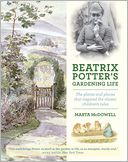
Beatrix Potter's Gardening Life by Marta McDowell: Book Cover
Potter's love of gardening  began in childhood, with marvelous nature drawings and the chance to watch professional gardeners during her wealthy family's holidays in the British countryside. While Peter Rabbit's nemesis, Mr. McGregor, was not a real person, McDowell writes that he resembled the gardeners Potter would have encountered.
Potter's active gardening began when, at age 39, she bought a 34-acre working farm with a cottage in England's Lake District. Her gardening style, on full display in the book's period black-and-white photos and modern color images, was romantic and unpretentious.
"She wasn't a formal person, and she abandoned a lot of formality in all parts of her adult life," McDowell says. Potter married local lawyer William Heelis in 1913, when she was 47, despite her parents' objection that Heelis was beneath her. The couple had servants, but Potter also helped cut hay in her fields.
A nature lover who eventually accumulated more than 4,000 acres and willed them to the National Trust conservation group, Potter grew cowslips, dahlias, gooseberries, crab apples, phlox, yellow loosestrife, snowdrops and bellflowers on her increasing land holdings.


"She had a cottage garden, which is a style that nowadays we're all very comfortable with: loose groups of flowers and maybe some fruits and even some lettuce mixed in," McDowell says.