I certainly have warm and fuzzy memories of reading of the adventures of Winnie the Pooh in the Hundred Acre Wood as a child. But did you know this lovely piece of literary prose was banned because the animals spoke? What could the reason be?
It was accused of alluding to Nazism and being ungodly because of talking animals. Certain institutions in Turkey and the UK have banned because the character of Piglet could offend Muslims. The much-loved book by A.A. Milne is among several popular children's books and a dictionary that have been banned in the U.S. over the years for being anti-Christian, too sexual or damaging to industry. Important works of literature such as The Diary of a Young Girl by Anne Frank, praised for its insight into the impact of the Second World War on children, was banned by a Virginia school over the 'sexual content and homosexual themes' when the definitive edition was released in 2010.
Other schools tried to ban it from reading lists because it was too depressing and last month a Michigan mother complained about its 'pornographic tendencies' over passages where Anne describes going through puberty.
Two books - Shel Silverstein's The Giving Tree and Dr Seuss's The Lorax - were both criticized for damaging the foresting industry. A
Colorado library barred the Giving Tree for being sexist in 1988 and in
1989 a Californian school district banned The Lorax incase it put
children off a career in the logging industry.
One of the most popular Dr Seuss books, Green Eggs and Ham, was not allowed in parts of California because of suggestions of 'homosexual seduction', according to Buzzfeed.
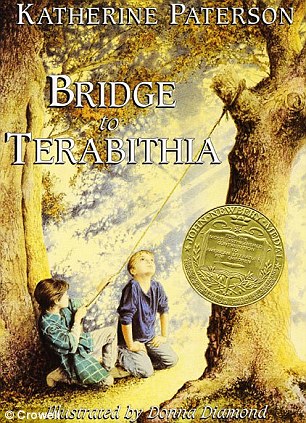
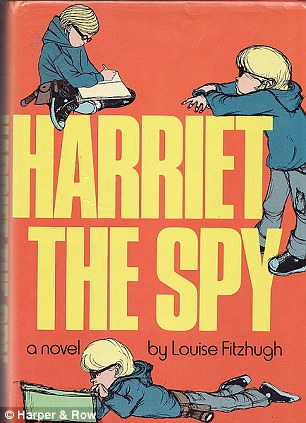
Both were viewed as encouraging children to be disrespectful for children. Harriet the Spy was accused of teaching 'children to lie, spy, talk back and curse,' and Katherine Peterson's novel Bridge to Terabithia was described as 'an elaborate fantasy world that might lead to confusion'.
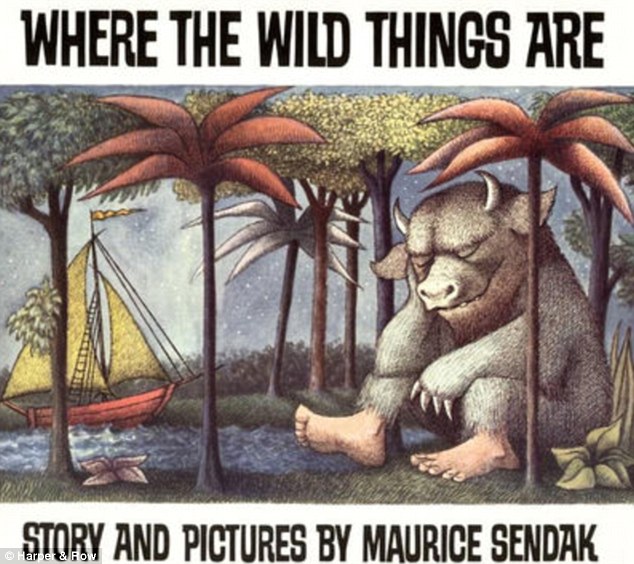
In several southern states, classics such as Where the Wild Things Are was banned in the 1960s for promoting the supernatural. The Wonderful Wizard of Oz was considered 'ungodly' in Chicago and was criticized for depicting women in strong leadership roles.
The Winnie the Pooh concerns even led to a 14-year-old girl in California being suspended from school for wearing Tigger socks after the school banned students from wearing clothes with the characters on, according to Banned Books. And, as a wrap on this topic today, California banned the 10th edition of the Merriam-Webster Dictionary in 2010 because it included a definition for 'oral sex'.
Why, oh why do kids insist on having the same story read to them again and again? With a sigh, we pick up the book for the hundredth time and begin to read. "Don't we want to read something different tonight? How about this one?" But, of course, we cannot dissuade our little one from repeating the same beloved book. But all is not lost. There are several excellent reasons why this repetition is amazingly important, crucial even, for a child's cognitive development.
Repeat to learn Kids learn through repetition, so it’s not surprising that they tend to ask for the same books over and over — this is how their brains absorb the stories and language patterns within. In fact, a 2011 study of children’s language acquisitionfound that when kids were read the same book multiple times, they remembered and retained the meaning of a new word better than kids who read different books (all containing the same word). It’s likely that hearing the phrasing and structure of a story many times over helps children grasp and hold on to new vocabulary. It’s also exciting for your child to learn a book so well that she knows what’s coming and can anticipate or even repeat and chime in with the words — the same way we all love being able to know what’s coming and sing the words to a favorite song.
Repetition actually changes the brain: every time we practice a word, concept, or skill, neuro-chemicals are released and pathways between brain cells are strengthened and solidified. So when your toddler puts an old favorite in your lap and hunkers down to hear it for the hundredth time, she’s not just being particular — she’s exercising a built-in learning strategy that supports her growing mind. Repeat for comfort Little children are creatures of habit. It’s a principle that holds true not just for reading, but for other aspects of life too. The same fishy cup for lunch, the same walking route to the park … kids look for patterns and regularity to help them figure out how the world works, and they find comfort and security in rituals. This is especially important for younger kids, who are little scientists and feel reassured when they can predict what’s ahead.
Reading the same book over and over is soothing to your child, which is one of the reasons it’s a great activity as part of bedtime routine. Just as with other aspects of the evening pre-bed line up — like a bath or a bottle of milk — hearing the words of a familiar book helps your child settle in and relax, and it makes a great cue for sleep. Toddlers and preschoolers can be particularly repetitive in their reading taste, but even older kids who read on their own sometimes revisit favorites over and over. Repeat, and expand Since reading the same books incessantly is developmentally appropriate (just bring the topic up with other parents of young kids for verification), it’s a good idea to follow your child’s lead. It's especially important when a particular book has become part of a sleep routine or some other transition point through the day. But that doesn’t mean you can’t open up other possibilities as well. For example, before bed, set up the agreement that you read three books: two that your child chooses and one that you choose. This way you can put a book in the rotation that you enjoy reading. Don’t let this activity become mind-numbing for you. The more fun you have reading to your child, the more likely you are to do it frequently and with enthusiasm.
Make a plan with your child that respects her need for repeating tales, but also ignites up your own excitement (since she’s cueing off of you as well) — that way you can both look forward to snuggling in and cracking a book together. Happy reading with your child or grandchild--over and over and over... Heather Turgeon authors the weekly Science of Kids column for Babble and her health and science writing has appeared in places like Salon, The Huffington Post, and The Daily Beast.
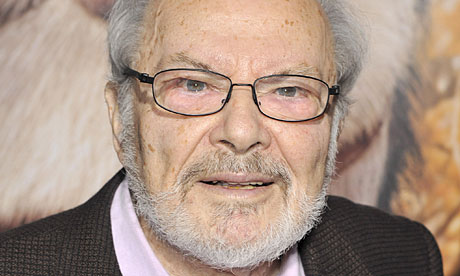
With the death of Maurice Sendak recently, adults who adored Max and his wild rumpus with big-eyed monsters, didn't just mourn the loss of the man. This was the artist who helped shape their childhoods. On a personal note, my twins, Colin and Ian, adored In the Night Kitchen,and we read it to them countless times!
Since his death at age 83, Sendak has been referred to frequently as the most important children's author of the 20th century. His millions of fans crossed borders of age, race, gender, nationality and religion.
It's a measure of Sendak's imagination that his stories, infused with a very particular Jewishness, contain no evidence of Judaism on the surface.
Sendak's relationship to Judaism was perhaps most shaped by the Holocaust:
The Holocaust has run like a river of blood through all my books. Anything I did had to deal with that — with my family, the ruination of my childhood, the humiliation of being a victim.
Sendak, whose parents traveled to the U.S. from Poland in the 1920s, was often sick as a child in Depression-era Brooklyn. His later writing and illustrations borrowed from his memories of childhood's dark corners and the way children can tap into their imaginations to escape those corners.
"It is always amazing to me that children survive childhood, that they go on to have professional careers and run countries," Sendak said at a talk at Washington University's Graham Chapel in 1989. "I think it's due to their tremendous courage. They have to be very brave. And that loyalty and courage and bravery is the subtext of everything I have ever written."
Sendak based the monsters in "Where the Wild Things Are" on his aunts and uncles that his parents had managed to bring to Brooklyn from the old country. "I hated them all," he said at Washington University's Graham Chapel. "They were grotesque, with their huge noses, their great cascades of hair, their bad teeth."
While Sendak's parents were able to bring his mothers' family out of Poland, his father's family was destroyed by the Nazis. As a teenager, Sendak studied the black-and-white photographs of his murdered relatives.
"His relationship to Judaism is a mostly secular one," Patrick Rodgers said. "He struggled growing up semi kosher. He didn't do much in the way of worship. He couldn't relate to the world his family came from, but he became really aware of it when that world was falling apart."
As absorbed as Sendak was with his Jewish roots, his God was not Abraham's God. In 2003, he told Terry Gross, host of NPR's "Fresh Air," that religion "made no sense to me. You know who my gods are, who I believe in fervently?" Sendak asked. "Herman Melville, Emily Dickinson — she's probably the top — Mozart, Shakespeare, Keats. These are wonderful gods who have gotten me through the narrow straits of life."
Please forgive me for posting another entry about children's author, Maurice Sendak so quickly after a previous one. When I read his remarks in an interview by Jenna Busch of the British art institution, The Tate, is was interesting to me. Curious, too.
(Take a look at the video of Mr. Sendak's comments in the video at the bottom of the post.)
Sendak is the author of one of the world's best known children's books, Where the Wild Things Are. Many of his other books have become time tested classics.
In the interview, Mr. Sendak said something quite surprising:
I don't believe that I have ever written a children's book. How do you set out to write a children's book? It's a lie ... The magic of childhood and the strangeness of childhood, the uniqueness that makes us see things that other people don't see. Sendak cites Herman Melville as an artistic influence, saying:
Herman Melville said that artists have to take a dive and either you hit your head on a rock and you split your skull and you die or that blow to the head is so inspiring that you come back up and do the best work that you ever did. But you have to take the dive and you do not know what the result will be.
Speaking to the New York Times, Sendak said that modern children's books are not always "truthful or faithful to what's going on with children."
"If there's anything missing that I've observed over the decades it's that that drive has declined," said the 83-year-old author, who admitted that he "hadn't kept abreast" of children's books and didn't see that many.
"There's a certain passivity, a going back to childhood innocence that I never quite believed in. We remembered childhood as a very passionate, upsetting, silly, comic business." Max, the wolf-suited star of Where the Wild Things Are, "was a little beast, and we're all little beasts," Sendak said.
Some of Sendak's titles – from his tale of a baby kidnapped by goblins, Outside Over There, to Max's journey to the land of the Wild Things – have provoked controversy. "You mustn't scare parents. And I think with my books, I managed to scare parents," said Sendak. Earlier children's authors "went by the rules that children should be safe and that we adults should be their guardians. I got out of that, and I was considered outlandish. So be it."
The author, who has just published his latest book Bumble-Ardy, the story of a pig who throws his own birthday party which, as ever, "runs against the grain of what's considered a proper childhood", believes there is "no protecting children". After seeing the Holocaust "demolish" his family, he was "very much afraid" when he was a child.
"I had to bear it even though I didn't have any idea what it meant. What language was there to tell a child? None. That has stayed with me all my life," he told the New York Times. "But all my books end safely. I needed the security in my soul of bringing these children back.
Ida comes back safe. Max finds his meal waiting for him. It means his mother loves him. The rough patches between them are solved. Mickey gets safely back in bed. We want them to end up OK, and they do end up OK. Unlike grownup books."
And despite the dangers and the terrors that inhabit his books, Sendak said he had never received a letter from a child which said "Go to hell". Instead, "they are always thanking me for opening the door, even if it was only peeking through to show how difficult life could be," he said. "What I do as best I can is out of a deep respect for children, for how difficult their world is. Yes, there have to be places for safe wonderful stories. It's a big world; it's a big profession. But there should still be crazy people like me."
Maurice Sendak turned 83 this June, but he's still hard at work. The Caldecott-winning author of classic children’s books such as Where the Wild Things Are has reached an agreement with HarperCollins to publish the first book illustrated and written by Sendak since Outside Over Therein 1981. The new picture book, which began its life as an animated segment for Sesame Street, is Bumble-Ardy. It tells the tale of Bumble, a mischievous pig who has reached the age of nine without ever having had a birthday party.
He takes matters into his own hands and invites all of his friends to a masquerade party that quickly gets out of hand.
“As a child, I felt that books were holy objects to be caressed, rapturously sniffed, and devotedly provided for,” said Sendak in accepting the Hans Christian Andersen Award (for excellence in illustration of children’s books) in Bologna, Italy in 1970. “I gave my life to them. I still do. I continue to do what I did as a child: dream of books, make books, and collect books.” Bumble-Ardy will be published by HarperCollins in September.
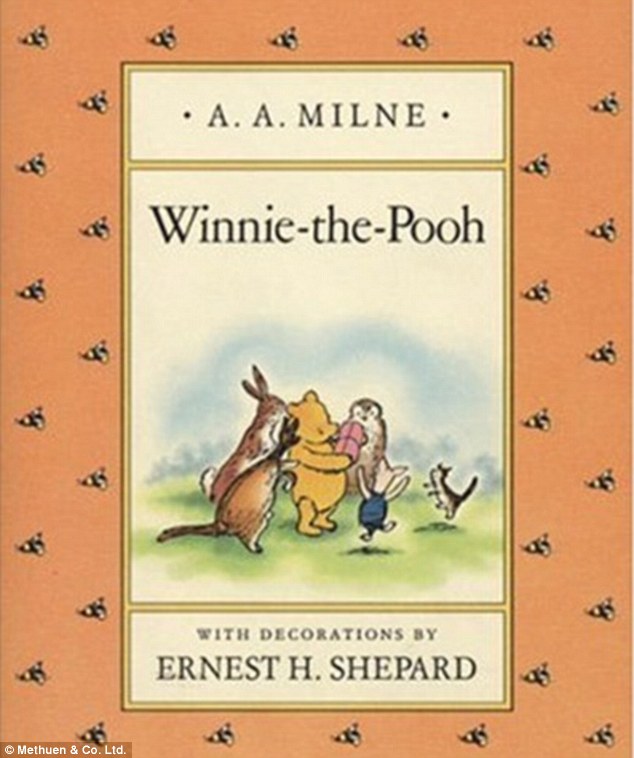 It was accused of alluding to Nazism and being ungodly because of talking animals. Certain institutions in Turkey and the UK have banned because the character of Piglet could offend Muslims.
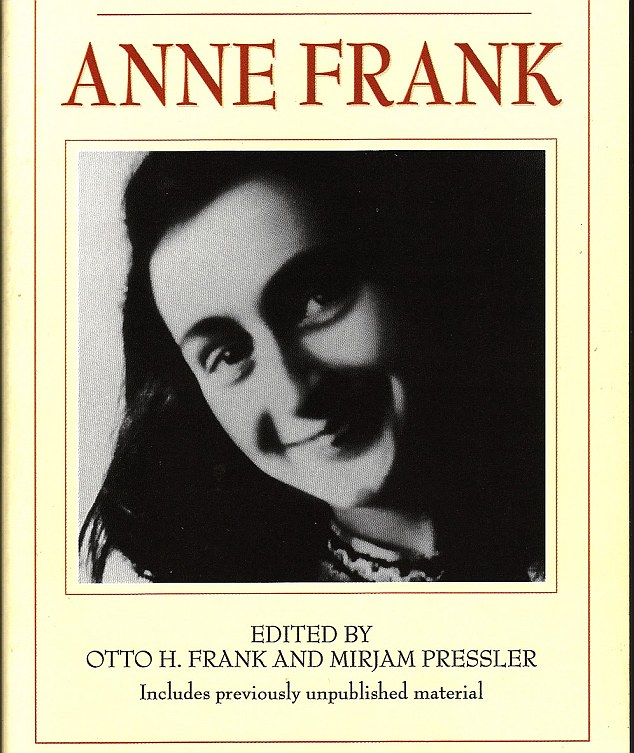 Important works of literature such as The Diary of a Young Girl by Anne Frank, praised for its insight into the impact of the Second World War on children, was banned by a Virginia school over the 'sexual content and homosexual themes' when the definitive edition was released in 2010.
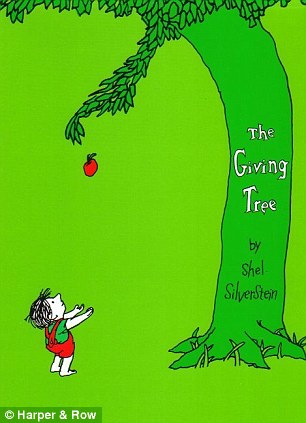 Two books - Shel Silverstein's The Giving Tree and Dr Seuss's The Lorax - were both criticized for damaging the foresting industry. A
Colorado library barred the Giving Tree for being sexist in 1988 and in
1989 a Californian school district banned The Lorax incase it put
children off a career in the logging industry.
 Buzzfeed.