Sunday, March 30, 2014

China at Forefront of Children's Book Market

Chinese children's books are making a global stand in terms of approaching literature.  The following post helps explain.


Product Details
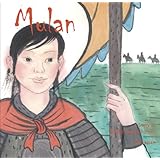
Mulan:  A Story in Chinese
and English
Li Jian and Yijin Wert
Ahmad Redza Khairuddin, president of the International Board on Books for Young People (IBBY), made the remarks at the Bologna 2014 Children's Book Fair in Italy.
China's publishing industry is not only helped by the country's huge population and fast-growing economy, but also benefits from cultural richness and government support, he noted.
The industry's collaboration with foreign experts, while enriching the content of children's books in China, shares a lot of Chinese content with the rest of the world, the president said, adding that he believed the entire world will benefit from Chinese children's literature.
dragons love milk
Because Dragons Love Milk
Marie Chow
According to Li Xueqiang, president of China Children's Press and Publication Group (CCPPG), children not only need to know the culture and tradition of their own country, but also the cultural environment of other countries.
For this reason, Li said, his publishing group was giving an opportunity to both Chinese writers and foreign illustrators to collaborate on the creation of outstanding new works.
Li made the remarks at the four-day book fair that closed Thursday. The event was an occasion for Chinese writers to exchange views with their counterparts from other countries inside China's 266-square meter space.
Product Details
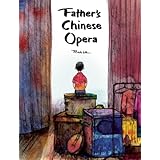
Father's Chinese Opera
Rich Lo
Brazilian illustrator Roger Mello, recipient of the 2014 Hans Christian Andersen Award, one of the oldest and most prestigious international awards in children's literature, highlighted what he called "a concern in China to bring high-quality books to children, which is very important because China is a reference for the world."
Canadian publisher and former IBBY President Patsy Aldana echoed Mello's viewpoint that the peculiarity and uniqueness of Chinese culture helped Chinese books for children get "better and better every year."
At a time when the global publishing situation was difficult, some of the major multinationals have become too commercial and oriented toward sales, she noted.
Product Details
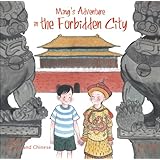
Ming's Adventure in the Foreign City
Li Jian and Yijin Wert
The result, she added, was that "the quality of books from the United States and Britain has really gone down."
Meanwhile, Aldana said, China saw "a marked increase in the quality of books and illustrations, the diversity of publishing and the new ways of telling stories."
"The more books are created to really do something important for children, the better chance they have of traveling around the world," she said, adding that she believed some excellent books in China "will be read by children everywhere."

Wednesday, March 26, 2014

Review of "A Sandy Grave" by Donna McDine

Today it is my great pleasure and honor to have author Donna McDine visit the blog once again.  I have known Donna for quite a few years and am delighted to host her and her new book from Guardian Angel Publishing, A Sandy Grave.


N.S. You’ve hand a prolific writing career so far.  What paths did you take to reach this artistic point?

D.M. At the beginning stages of my writing career I expanded my education beyond what I had attended college for (Business Administration) through the Institute of Children’s Literature writing for children and teenagers. After “picking the brains” of established writers I then joined a writer’s critique group and began attending writer’s conferences. Both are imperative in honing my writing skills on an ongoing basis. My critique group is online and we live in various parts of the country, we’ve been together now going on five years. Yes, ladies five years…can you believe it! I also was involved in an in-person group at my local library, but unfortunately it has disbanded.

Donna McDine
N.S. I fell in love with your new book A Sandy Grave, the minute I read it.  Where did the idea come from, which is what all authors want to know.

D.M. Nancy, thank you so much. It warms my heart that you enjoyed A Sandy Grave so much! While reading the newspaper I came across a story about a dead washed up whale on a California beach and what the authorities had to do to protect the whale before being able to bury it.

N.S. You have written several books that speak to the greater good of humanity.  Is that theme a part of you?  And if it is, how did it develop?

D.M. At first I did not pay attention to this particular theme, but the more I read and hear about horrific occurrences writing about the greater good of humanity ends up becoming part of most of my manuscripts. For instance, one of my non-fiction articles that I just submitted for consideration is about the good youngsters are doing right in my own community to help special needs children. Often times, the newspaper and broadcast news are filled with the negatives of the world and to share specific examples of “good neighbor” behavior warms my soul.

N.S. Where will your next book take you—and your readers? 

D.M. I’ve been working on a middle grade manuscript off and on for several years now and my critique group has encouraged me to dust it off and get it into tip top shape for submission to agents and publishing houses. It’s a historical fiction manuscript that includes history of the historical hamlet, Tappan, New York that I’ve resided in for the last 16 years.

N.S. How can readers learn more about you and your accomplishments?

D.M. Those interested can visit me at www.donnamcdine.com, www.donna-mcdine.blogspot.com or drop me an email at donna@donnamcdine.com.

By the way, Donna is running a contest during her tour for a $50 Barnes and Noble gift card. Readers may enter at:   http://www.pumpupyourbook.com/2014/02/23/pump-up-your-book-presents-a-sandy-grave-virtual-book-publicity-tour/

Thank you Nancy for hosting me during my Pump Up Your Book Virtual Book Tour!

Sunday, March 23, 2014

New kids' Books for...Fall?


That's what I said.  I know it is hardly spring, but booksellers being who they are, with books to print, and orders to fill and markets to stock...well, there we are.  In spite of the seemingly seasonal miscue, the following assortment of offerings for the autumn are lovely, lively, and uplifting.  Have a look at a partial list from Publishers Weekly.


Telephone
Telephone by Mac Barnett, illus. by Jen Corace, this book is a rendition of the message-passing game.  This time, however, it's birds on a wire playing the game.


If Kids Ran the World
All roads lead to kindness in this powerful final collaboration between Leo and Diane Dillon. In a colorful tree house, a rainbow of children determine the most important needs in our complex world, and following spreads present boys and girls happily helping others.


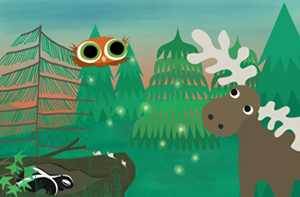
Little Owl's Day
Little Owl’s Day by Divya Srinivasan, in which Little Owl awakens while the sun is still up and gets a new view of the forest.
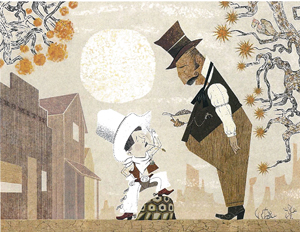
Kid Sheriff and the Terrible Toads
Bob Shea


Drywater Gulch has a toad problem—the Toad brothers are a gang of ruffians who just don’t appreciate a good chili, and they’re terrorizing the town. Thank goodness for Sheriff Ryan, who knows a lot about… dinosaurs.


9780385379083
Marlene, Marlene, Queen of Mean

Marlene is the self-appointed and cruel queen of the playground, sidewalk and school — until big Freddy stands up to her.

Appetite whetted?  These are but a very few of the assortment of great books for kids coming soon to a bookstore near you.  Get out there and have a look for yourself!


Tuesday, March 18, 2014

New Data: Less Than 3 Percent of Children's Books Surveyed in 2013 Were About African Americans

A shocking statistic provided by Cooperative Children’s Book Center at the University of Wisconsin-Madison’s School of Education:   Of some 3,200 children’s books surveyed in 2013 by the Cooperative Children’s Book Center at the University of Wisconsin-Madison’s School of Education, only 93 were about black people.


In a country where African Americans comprise at least 13 percent of the population, less than 3 percent of the new children’s books received by the Center in 2013 were about black people and even fewer were by black authors – about 2 percent. 
In 1994, the center began also tracking books by and about American Indians, Asians, and Latinos and found similarly dispiriting figures: Of the 3,200 children’s books it surveyed in 2013, 93 were about blacks, 34 about American Indians, 69 about Asians and Pacific Americans, and 57 about Latinos.
Perhaps the most troubling trend is how little the numbers have changed since the center began tracking them in 1985 and 1994, for blacks, and other minority groups, respectively.We educators realize that when parts of our society are scarcely represented in the books we read, we’re less inclined to know,relate to, and value those groups.

 Even more troubling, when minority readers, especially children, don’t see themselves represented in the books they read, they don’t receive the validation and affirmation of self that reading provides.
Children’s book author Walter Dean Myers, author of “Monster” and a former Library of CongressNational Ambassador for Young People’s Literature, recently told his story in a poignant op-ed in the Times.
Myers says he grew up in Harlem reading what many kids read – comic books, bible stories, “The Little
Engine That Could,” “Goldilocks,” then Robin Hood, then Shakespeare, Mistral, and Balzac.
As I discovered who I was, a black teenager in a white-dominated world, I saw that these characters, these lives, were not mine,” Myers writes. “I didn’t want to become the 'black' representative, or some shining example of diversity. What I wanted, needed really, was to become an integral and valued part of the mosaic that I saw around me.
With that realization, he stopped reading, stopped going to school, and joined the Army. His post-Army days were “a drunken stumble through life,” rescued, ultimately, by writing and books.
Myers read “Sonny’s Blues,” by James Baldwin, a story about black
people in Harlem. Myers “didn’t love the story,” but it was life-changing nonetheless.
“By humanizing the people who were like me, Baldwin’s story also humanized me. The story gave me a permission that I didn’t know I needed, the permission to write about my own landscape, my own map.”
To fill the void he encountered as a youth, Myers began writing his own children’s books about black kids. Black kids accustomed to stories by white authors about white kids in white environments are often elated by his books, he says.
“They have been struck by the recognition of themselves in the story, a validation of their existence as human beings, an acknowledgment of their value by someone who understands who they are.”

We need to write, promote, and lionize books for African-American kids.  It is pivotal for the good of our society as a whole.

Thursday, March 13, 2014

The Magic of Using Middle Grade Novels in the Classroom

Those of us who have taught or are still teaching middle grade know it can be a challenge to inspire some of our students to read.  But all is not lost! 

 Never have there been more middle grade novels written to ignite the reading flame in our children's minds.  What can reading such good, well-written, entertaining, and life changing books do overall for kids?

Let's first define some of the changes mg kids go through on their journeys to becoming young adults.
  • They usually develop a stronger sense of self.
  • These years are the beginning of the end of childhood.
  • Romantic fantasies begin for girls and boys.
  • Both genders begin moving in packs which can lead to leadership.
  • Bullying and being bullied can occur, involving both boys and girls.
Prominent themes with middle grade children are:

Good vs Evil
A Great Journey
Growing Up

Middle Grade children are on the cusp of emerging into the adults they will some day be.  Good novels written for them can help assure this age group they are on the right track emotionally.The books can validate who they are in the moment, who they are looking forward to becoming, and the children they are reading about have facets of themselves within those pages.  Powerful stuff for an impressionable middle grader to grab hold of and not let go.  

Read a middle grade novel with your students or your young one at home.  Discover for yourself how powerful and life-changing reading about a protagonist (or antagonist) can be.  And how very much your impressionable youth may benefit from doing so.  I don't think you will be disappointed at the outcome.

Sunday, March 9, 2014

Discussing Banned and Challenged Books is Not Only for September

I realize that Banned Book Week every September is important to keep this important issue in front of the public.  But it's also necessary to discuss issues like censorship year round as well.

Banned booked are books that have actually been removed from a library or school system, a challenged book is the attempt to ban. Read about these challenged books and authors, including Katherine Paterson, Madeleine L'Engle, James Marshall, Roald Dahl and more.

Most of these books listed below were challenged for being sexually explicit, containing offensive language, or being unsuitable for the age group, and most were challenged because they were included on a suggested reading list for students, part of a class assignment, or available in a school library.  However, many of these books have received high accolades for teaching tolerance and understanding of others.  According to the ALA President Carol Brey-Casiano:

banned books weekNot every book is right for every person, but providing a wide range of reading choices is vital for learning, exploration, and imagination. The abilities to read, speak, think, and express ourselves freely are core American values.


The First Amendment of the Constitution guarantees our right to free speech, which includes the right to read and write books that might be considered by some to be too violent or offensive. Because this freedom is one of our fundamental rights as Americans, some people feel that any form of censorship is wrong. Most people fall somewhere in the middle, believing that people should be free to read whatever they choose, but that in some rare instances censorship is acceptable.


Have a look at a partial list of banned books below.  I think you will be surprised at the extent of them.  


The Absolutely True Diary of a Part-Time Indian by Sherman Alexie
Bless Me, Ultima by Rudolfo Anaya
The Color Purple by Alice Walker
Extremely Loud and Incredibly Close by Jonathan Safran Foer
Eleanor & Park by Rainbow Rowell
I Hunt Killers by Barry Lyga
The House of Spirits by Isabel Allende
The Curious Incident of the Dog in Night-Time by Mark Haddon
A Bad Boy Can Be Good for a Girl by Tanya Lee Stone
Girl, Interrupted by Susanna Kaysen
The Perks of Being a Wallflower by Stephen Chobsky
Monster by Walter Dean Myers
Persepolis by Marjane Satrapi
Neverwhere by Neil Gaiman

Tuesday, March 4, 2014

How Does Your Country Rank in Weekly Reading Time?

Have you ever wondered which countries around the world spend the most time reading?


India leads the list with citizens of the country spending an average of 10.42 hours a week reading per person, according to the NOP World Culture Score Index. Thailand was a close second with 9.24 hours spent reading each week. China came in third with 8 hours a week spent reading.

The U.S. came in No. 22 on the list with the average time spent reading per week per person clocking in at 5 hours and 42 minutes.
Ashu, a second-grader living in Mumbai, peruses a book.
(Robert Marquand)
Writer Charlie Jane Anders discussed the new data in her column titled "Does anybody read books the right way anymore?," noting that adults sitting down on the sofa with a title and poring over it for hours is less and less common.
"We've never had more distractions keeping us from focusing totally on a book as we have today," Anders wrote. "...Now that we read on e-readers and phones, do we tend to read a few minutes at a time, instead of sitting in a chair for an hour or two?"
Anders noted that reading in short bursts mean we get less immersed in a story
Hours reading per week per person


1. India — 10 hours, 42 minutes
2. Thailand — 9:24
3. China — 8:00
4. Philippines — 7:36
5. Egypt — 7:30
6. Czech Republic — 7:24
7. Russia — 7:06
8. Sweden — 6:54
8. France — 6:54
10. Hungary — 6:48
10. Saudi Arabia — 6:48
12. Hong Kong — 6:42
13. Poland — 6:30
14. Venezuela — 6:24
15. South Africa — 6:18
15. Australia — 6:18
17. Indonesia — 6:00
18. Argentina — 5:54
18. Turkey — 5:54
20. Spain — 5:48
20. Canada — 5:48
22. Germany — 5:42
22. USA — 5:42
24. Italy — 5:36
25. Mexico — 5:30
26. U.K. — 5:18
27. Brazil — 5:12
28. Taiwan — 5:00
29. Japan — 4:06
30. Korea — 3:06

Sunday, March 2, 2014

NEA's Read Across America Takes Place on March 3, 2014

Calling all children, it’s time to read! National Education Association’s (NEA) 17th Annual Read Across America event will take place on Monday, March 3, 2014.
NEA LogoThe day is designed to encourage reading among school kids. Here is more about the event from the website:

 “The Seussical celebration will kick off a week of reading across the nation as NEA members gather students, parents, and community members together to share their love of reading. It’s never too early to plan your event and NEA’s RAA will be posting tips and resources to help you make your event Seussational.”
Schools, libraries and book stores are encouraged to host their own events to support the cause. For example, Barnes & Noble is hosting free story time events to support the national day of reading at stores across the country.

Read a Dr. Seuss book with your young ones.  Take your learner to a bookstore so s/he can make a make a purchase choice and feel ownership for the book.  What a wonderful way to model a love of books, particularly during Read Across America!

Tuesday, February 25, 2014

The Excitement of Using Middle Grade Novels in the Classroom

Next month I will present once again at the Illinois Reading Council Conference.  The conference is held from March 13-15.  It is always a stellar coming together of teachers, editors, authors and others interested in the reading welfare of children  I am honored to have been part of it for the past four years.


My presentation this year is titled:  Using Middle Grade Books in the Classroom:  A Bridge to Growth, Self-Awareness, and Maturity.

This has been a fun presentation to do, along with my power point.  I have defined middle school kids for this post with some authority, as I taught them for some ten years.

The first bridge I use is Growth.  In what ways do middle grade students grow?  Here are a few examples:

A beginning of the end of childhood
A stronger sense of self
Early romantic fantasies for girls and boys
Kids moving in packs defined by gender
Bullying and being bullied for some boys  (Girls, too.)

Using trade novels to address this partial list of events in a middle schooler's life, is an exceptional aid for teachers of this special and magical time of childhood.


As Stanley Milgrim observed:

Crossing over the line from childhood to adolescence is difficult because the line is not clear and there are inherent risks involved.  It is an emotional leap as well as a physical one, and maintaining a balanced sense of self becomes increasingly difficult.

It is a pleasure to work with teachers of middle school kids at the conference.  It is my hope they will enjoy and profit from my presentation.             


Friday, February 21, 2014

New Program in the US Aids Teaching Love of Reading to Arab Kindergarten Children


A new national program, Maktabat al-Fanoos (“Lantern Library”), encourages pre-school children in Arab communities to read.

A Kg teacher near Hadera reads
Sumsum the Mouse’ in Baka al-Gharbiya, 

The program, geared towards three- to five-year-olds, aims to instill a love of reading from an early age and provide children the opportunity to enjoy reading books together with their teachers and parents.

During the school year, more than 45,000 children in 1,750 kindergartens will receive four children’s books each, one per month, as a gift to bring home and read with their families. The Education Ministry is running the program in collaboration with the Massachusetts-based Harold Grinspoon Foundation and the California-based Price Family Charitable Fund. According to Israeli Education Minister Shai Piron:

I am proud that as of today, Arab society in Israel can also enjoy the highest quality program to encourage children to read, and instill in them a love of books, which is key to future success in school.


Teachers will engage their students in fun and educational activities surrounding the books’ stories, and after exploring the books in school, children will receive copies for their home libraries. The last pages of each book will include suggestions to parents for joint activities and discussions.


“In the Arabic sector there are a lot of homes that don’t have books, and through this program, children will receive different books so that over a period of two to three years, from pre-school and through kindergarten, they can build a nice collection,” Vromen said.


The first book the children will receive, Sumsum (“Sesame”) the Mouse, tells the story of a field mouse who tends to daydream while the other mice work and gather food for the winter. When the cold finally arrives and Sumsum’s friends are bored and unhappy, the little mouse shares his colorful stories and lifts their spirits of his friends. The book allows teachers and parents to stimulate a discussion on the different kinds of personal contributions toward a joint effort.

This year the program will encompass all kindergartens and special education state schools in the Arab, Beduin and Druse communities as well as some pre-schools. Teachers will receive suggestions for creative activities surrounding the book, including integrating the stories into games, movements, discussions and artworks.

A committee of experts on education and children’s literature selected the four books. Each deals with topics closely related to the world of children and aims to stimulate discussions on universal values and to enhance the readers’ Arabic vocabulary.

Sunday, February 16, 2014

Before They Were Famous: The Strangest Jobs of Six Literary Luminaries


Everybody has to make a living, even writers.  Here are some interesting jobs by famous authors before they became famous.  I am convinced, though, that each of these people gained insight about the human condition while fulfilling their jobs. 

Kurt Vonnegut managed America’s first Saab dealership in Cape Cod during the late 1950s, a job he joked about in a 2004 essay: “I now believe my failure as a dealer so long ago explains what would otherwise remain a deep mystery: Why the Swedes have never given me a Nobel Prize for Literature.”
 John Steinbeck took on a range of odd occupations before 
earning enough to work as a full-time writer. Among his day jobs: apprentice painter, fruit picker, estate caretaker and Madison Square Garden construction worker.
 Stephen King served as a janitor for a high school while struggling to get his fiction published. His time wheeling the cart through the halls inspired him to write the opening girls’ locker room scene in Carrie, which would become his breakout novel.
 Harper Lee worked as a reservation clerk for Eastern Air Lines for more than eight years, writing stories in her spare time. This all changed when a friend offered her a Christmas gift of one year’s wages, with the note, “You have one year off from your job to write whatever you please.” She wrote the first draft of To Kill a Mockingbird within the year.
 Before his writing career took off, William Faulkner also worked for the Postal Service, as postmaster at the University of Mississippi. In his resignation note, he neatly summarized the struggle of art and commerce faced by many authors: “As long as I live under the capitalist system I expect to have my life influenced by the demands of moneyed people. But I will be damned if I propose to be at the beck and call of every itinerant scoundrel who has two cents to invest in a postage stamp. This, sir, is my resignation.”
 T.S. Eliot worked as a banker, serving as a clerk for Lloyds Bank of London for eight years. The job must have been a bummer—he composed passages of The Waste Land while walking to work each da Sometimes, an odd job can actually lead to opportunity. Poet Vachel Lindsay was interrupted as he dined at a hotel restaurant in Washington, D.C., by a busboy who handed him some sheets of poetry. At first irritated by the young man, Lindsay was quickly impressed by the writing. When he asked, “Who wrote this?” the busboy replied, “I did.” Langston Hughes was about to get his big break

Tuesday, February 11, 2014

Lonely Planet Launches New World Search Children's Series


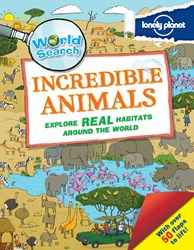
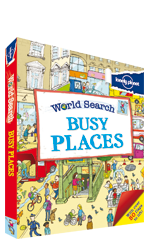
Lonely Planet, the world’s leading travel authority, has published three brand new and highly visual books for children to inspire curiosity about exploring the world. Lonely Planet’s World Search series contains hands-on books for little adventurers aged 3 and up: World Search: Amazing Jobs, World Search: Incredible Animals and World Search: Busy Places.

With Lonely Planet’s World Search series, kids can travel the world in search of the weird, wonderful and sometimes plain silly things that happen all over the globe. From animals and cities to the cool jobs people do, there’s plenty for them to look for and find. They can hunt amazing treasure and spot some awesome objects all over the world without ever leaving home.

These fun titles contain over 50 sturdy, easy-to-lift flaps so that kids can see what’s happening inside the amazing landscapes. With lots of detailed drawings to keep young ones engrossed, World Search is perfect for airplanes, road trips or quiet time at home.
World Search: Amazing Jobs
World Search: Amazing Jobs takes kids in- search of the most amazing jobs in the world, including being a stuntman on a Bollywood film set, a park ranger in Yellowstone National Park and a Royal Flying Doctor in the Australian Outback.

World Search: Incredible Animals shows incredible animals in their habitats around the world, including Antarctica (polar), Red Sea (coral reef), Serengeti (grasslands) and the Indian jungle (rainforest).

Not For Parents: World Search - Busy PlacesWorld Search: Busy Places is a tour through some of the busiest places in the world, including Rio’s Copacabana beach, New York City, London’s Heathrow Airport and Paris streets in search of hidden items.

About the Books:
World Search: Amazing Jobs
Published by Lonely Planet
ISBN: 9781743219201
16 pages, $14.99, full color, 11”x8.5”, board
February 2014
World Search: Incredible Animals
Published by Lonely Planet
ISBN: 9781743219225
16 pages, $14.99, full color, 11”x8.5”, board
February 2014
                                         World Search: Busy Places
                                         Published by Lonely Planet
                                         ISBN: 9781743219188
                                         16 pages, $14.99, full color, 11”x8.5”, board
                                         February 2014