Have a look at this interesting study from Scholastic. Not surprisingly, ebook reading has exploded and will continue in that vein, I have no doubt. Take a look at the material, and see what you think!

In the fourth edition of the Kids & Family Reading Report™ , a national survey released today, kids age 6-17 and their parents share their views on reading in the increasingly digital landscape and the influences that impact kids’ reading frequency and attitudes toward reading.
The study, a biannual report from Scholastic (NASDAQ: SCHL), the global children’s publishing, education and media company, and the Harrison Group, a leading marketing and strategic research consulting firm, reports that:

- The percent of children who have read an ebook has almost doubled since 2010 (25% vs. 46%).
- Half of children age 9-17 say they would read more books for fun if they had greater access to ebooks – a 50% increase since 2010.
- Overall, about half of parents (49%) feel their children do not spend enough time reading books for fun – an increase from 2010 when 36% of parents were dissatisfied with time their child spent reading.
- Seventy-two percent of parents show an interest in having their child read ebooks.
 Findings reveal the potential for ebooks to motivate boys, who are more commonly known to be reluctant readers, to read more.
- One in four boys who has read an ebook says he is now reading more books for fun.
eBooks may also be the key to transition moderately frequent readers (defined as kids who read one to four days a week) to frequent readers (those who read five to seven days a week).
- More than half (57%) of moderately frequent readers who have not read an ebook agree they would read more if they had greater access to ebooks.
 Even so, the love of and consistent use of print books is evident among kids, regardless of age.
- Eighty percent of kids who read ebooks still read books for fun primarily in print.
- Fifty-eight percent of kids age 9-17 say they will always want to read books printed on paper even though there are ebooks available (a slight decline from 66% in 2010), revealing the digital shift in children’s reading that has begun.
"We are seeing that kids today are drawn to both print books and ebooks, yet ereading seems to offer an exciting opportunity to attract and motivate boys and reluctant readers to read more books," noted Francie Alexander, Chief Academic Officer, Scholastic. "While many parents express concern over the amount of time their child spends with technology, nearly half do not have a preference of format for their child’s books.
 The message is clear – parents want to encourage more reading, no matter the medium.
The report also notes that the gender gap in reading frequency and attitudes towards reading is narrowing; however, the narrowing of the gap is driven more by decreases among girls than it is by increases in boys.

- Among girls since 2010, there has been a decline in frequent readers (42% vs. 36%), reading enjoyment (39% vs. 32% say they love reading), and the importance of reading books for fun (62% vs. 56% say it is extremely or very important).
- Among girls ages 12-17 there was an increase in the amount of time they spend visiting social networking sites and using their smartphones for going online.
- Among boys since 2010, there has been an increase in reading enjoyment (20% vs. 26% say they love reading), and importance of reading books for fun (39% vs. 47%). Reading frequency among boys has stayed steady, with 32% being frequent readers.
The study also looked at the influences that impact kids’ reading frequency, and parents ranked extremely high. The report found that having a reading role-model parent or a large book collection at home has a greater impact on kids’ reading frequency than does household income. Plus, building reading into kids’ daily schedules and regularly bringing home books for children positively impacts kids’ reading frequency.
By now most of you know I am a major R.L. Stein fan. I love his style. He has done so much for boy readers and continues to do so. Here is something new for the author. He has turned his villains on their heads as it were. Have a look at what he has written.
 Red Rain may have some tropes in common with R.L. Stine's best-selling series of scary books for children, but the audience here is clearly readers who enjoy the likes of Stephen King and Dean Koontz. Villainous lawn gnomes and ventriloquist dummies are replaced by real people who cause real pain.
The horror is grisly. Stine likes food metaphors to convey the gore: Windpipes ripped out of throats like "some kind of long pasta noodle." A young woman holding her intestines as "a gusher of pink and yellow sausage" oozes through her fingers.
It's not really spoiling any suspense to say Stine has flipped his "Goosebumps" formula and made the kids the villains instead of the good guys.
When twin 12-year-old boys Samuel and Daniel are adopted by a travel writer after a deadly hurricane off the South Carolina coast, there are ominous signs that all is not well with the "bruvvers." Readers understand something's amiss immediately, even if it takes the book's characters awhile.
Red Rain may have some tropes in common with R.L. Stine's best-selling series of scary books for children, but the audience here is clearly readers who enjoy the likes of Stephen King and Dean Koontz. Villainous lawn gnomes and ventriloquist dummies are replaced by real people who cause real pain.
The horror is grisly. Stine likes food metaphors to convey the gore: Windpipes ripped out of throats like "some kind of long pasta noodle." A young woman holding her intestines as "a gusher of pink and yellow sausage" oozes through her fingers.
It's not really spoiling any suspense to say Stine has flipped his "Goosebumps" formula and made the kids the villains instead of the good guys.
When twin 12-year-old boys Samuel and Daniel are adopted by a travel writer after a deadly hurricane off the South Carolina coast, there are ominous signs that all is not well with the "bruvvers." Readers understand something's amiss immediately, even if it takes the book's characters awhile.
 It's a page turner until the end, with short chapters that help increase the pace. Stine enjoys himself writing not for kids but about them.
For parents, there's plenty here to keep you up at night. Stine deftly makes one of his characters a child psychologist whose questions mirror our own: How much freedom of choice should kids have? When do they deserve to be treated like adults? And if you suspect they're up to no good with their friends, how quickly should you step in?
Quicker than they do in this wicked little book, that's for sure.
ROB MERRILL Associated Press
It's a page turner until the end, with short chapters that help increase the pace. Stine enjoys himself writing not for kids but about them.
For parents, there's plenty here to keep you up at night. Stine deftly makes one of his characters a child psychologist whose questions mirror our own: How much freedom of choice should kids have? When do they deserve to be treated like adults? And if you suspect they're up to no good with their friends, how quickly should you step in?
Quicker than they do in this wicked little book, that's for sure.
ROB MERRILL Associated Press
Those of you who follow this blog know that I love R.L. Stine and Goosebumps! The series came at a time when books were not to scare children, when traditional books ruled. And yet, his books are fun, a little scary but not too scary. They're just right.
 Please have a look at a recent interview of Stine by Nick Zieminski. Read and enjoy!
Stine is the author of "Goosebumps" and other series for young readers that have sold more than 300 million copies in 32 languages and inspired TV shows, merchandise, a theme park attraction and a Wii game.
Please have a look at a recent interview of Stine by Nick Zieminski. Read and enjoy!
Stine is the author of "Goosebumps" and other series for young readers that have sold more than 300 million copies in 32 languages and inspired TV shows, merchandise, a theme park attraction and a Wii game.
 For many children, Stine's mildly scary books are their first step up from picture books. Their language is accessible and they tend to sidestep real-world concerns, relying on fantastical creatures, ghosts and the occasional slow-moving zombie for their scares.
July was the 20th anniversary of Goosebumps, which still sell several hundred thousand copies a month. Stine writes six Goosebumps books a year and at least one novel. A horror story for adults, "Red Rain," about evil children, is due later this year. Stine spoke with Reuters about his extraordinary productivity:
Q: At its peak, you sold 4 million books a month. Why?
A: "The secret of Goosebumps, and the reason it got so enormous in the 90s, was it was the first book series to appeal equally to boys and girls. Everyone in publishing (assumes) girls read and boys don't read. In fact, these books were originally done for a girl audience. And then the fan mail started coming in and it was half from boys.
For many children, Stine's mildly scary books are their first step up from picture books. Their language is accessible and they tend to sidestep real-world concerns, relying on fantastical creatures, ghosts and the occasional slow-moving zombie for their scares.
July was the 20th anniversary of Goosebumps, which still sell several hundred thousand copies a month. Stine writes six Goosebumps books a year and at least one novel. A horror story for adults, "Red Rain," about evil children, is due later this year. Stine spoke with Reuters about his extraordinary productivity:
Q: At its peak, you sold 4 million books a month. Why?
A: "The secret of Goosebumps, and the reason it got so enormous in the 90s, was it was the first book series to appeal equally to boys and girls. Everyone in publishing (assumes) girls read and boys don't read. In fact, these books were originally done for a girl audience. And then the fan mail started coming in and it was half from boys.
 "I have a boy and a girl in every book. They're all 12. They're aimed at 7-12 year olds. Second graders can read them. By 12, I sort of lose them. They go on to other authors."
Q: There's little outright cruelty in your stories. Where do you draw the line in terms of what's appropriate?
A: "I have some rules. No one ever dies in a Goosebumps book. If there happen to be ghosts and they are dead, it happened before the book starts. And I don't do any real serious problems. Kids have to know this is a creepy fantasy and it couldn't really happen."
Q: And it's always the kids who solve problems. Parents don't interfere.
"I have a boy and a girl in every book. They're all 12. They're aimed at 7-12 year olds. Second graders can read them. By 12, I sort of lose them. They go on to other authors."
Q: There's little outright cruelty in your stories. Where do you draw the line in terms of what's appropriate?
A: "I have some rules. No one ever dies in a Goosebumps book. If there happen to be ghosts and they are dead, it happened before the book starts. And I don't do any real serious problems. Kids have to know this is a creepy fantasy and it couldn't really happen."
Q: And it's always the kids who solve problems. Parents don't interfere.
 A: "The parents are useless. Either the parents don't believe them or the parents aren't there."
Q: When you write, for example, about a hideous mask that the heroine can't take off, one wonders if your deeper theme is the horror of adolescence.
A: "I didn't really think of that. When my son was little he was trying on a green Frankenstein mask and he was pulling it down over his face and he couldn't get it off. And he was tugging, tugging. I thought, what a great idea for a story. I should've helped him. I wasn't a good parent that day."
Q: Do you still claim the title of "the world's best-selling children's author"?
A: "I think J.K. Rowling's passed me by. I'm No. 2 now."
Q: This is your obligatory question about the number of books you've published.
A: "I've lost count, which is kind of obnoxious. I've written 330 books, or something. I've got a ways to go to catch up to Isaac Asimov. I used to see him at the post office, mailing off two or three manuscripts at a time. He wrote 550 books."
Q: What were you into when you were the age of your readers? How did you come into this line of work?
A: "I was a very shy kid, very fearful of a lot of things, which is bad when you're a kid but now it's very helpful. I can remember back and remember that feeling of panic being a kid, and try to convey that in the books.
A: "The parents are useless. Either the parents don't believe them or the parents aren't there."
Q: When you write, for example, about a hideous mask that the heroine can't take off, one wonders if your deeper theme is the horror of adolescence.
A: "I didn't really think of that. When my son was little he was trying on a green Frankenstein mask and he was pulling it down over his face and he couldn't get it off. And he was tugging, tugging. I thought, what a great idea for a story. I should've helped him. I wasn't a good parent that day."
Q: Do you still claim the title of "the world's best-selling children's author"?
A: "I think J.K. Rowling's passed me by. I'm No. 2 now."
Q: This is your obligatory question about the number of books you've published.
A: "I've lost count, which is kind of obnoxious. I've written 330 books, or something. I've got a ways to go to catch up to Isaac Asimov. I used to see him at the post office, mailing off two or three manuscripts at a time. He wrote 550 books."
Q: What were you into when you were the age of your readers? How did you come into this line of work?
A: "I was a very shy kid, very fearful of a lot of things, which is bad when you're a kid but now it's very helpful. I can remember back and remember that feeling of panic being a kid, and try to convey that in the books.
 "When I was nine or 10, I just started staying in my room and typing these stories, a little joke magazine. I wrote funny stories for years. I was an editor at Scholastic in my 20s and did social studies magazines for kids. Then I had a humor magazine, which was my goal in life. It was called 'Bananas.' I had the best time. While I was doing it, I started writing funny children's books, joke books."
Q: I've read you get a lot of fan mail. What do kids say?
A: "That's one of the best parts of writing for kids. I get wonderful mail, tons and tons. Here's a couple classic letters:
"'Dear R.L. Stine, I really love your books but can you answer one question, why don't the endings make any sense?'
 "'Dear R.L. Stine, I'm huge fan of your books. Your friends and family are proud of you, no matter what anybody says.'
"'Dear R.L. Stine, I've read 40 of your books and I think they're really boring.'
"That's my favorite."
Q: What do you read for pleasure?
A: "I read a lot of thrillers and mysteries. I'm in the international thriller writers' organization. We all get together every summer. So I read Lee Child and Harlan Coben and Doug Preston and Michael Connelly. I don't read any nonfiction. I don't like the real world."
Q: These are physical books?
A: "Mostly. I have a Kindle when I travel."
Q: Do you feel boxed in by horror?
A: "No, because I put a lot of humor in the books."
Q: Are you a very disciplined writer?
A: "I'm a machine. It's like a full-time job. I work six days a week. I sit down at the computer, maybe 10 o'clock, and I write 10 pages a day every day."
"'Dear R.L. Stine, I'm huge fan of your books. Your friends and family are proud of you, no matter what anybody says.'
"'Dear R.L. Stine, I've read 40 of your books and I think they're really boring.'
"That's my favorite."
Q: What do you read for pleasure?
A: "I read a lot of thrillers and mysteries. I'm in the international thriller writers' organization. We all get together every summer. So I read Lee Child and Harlan Coben and Doug Preston and Michael Connelly. I don't read any nonfiction. I don't like the real world."
Q: These are physical books?
A: "Mostly. I have a Kindle when I travel."
Q: Do you feel boxed in by horror?
A: "No, because I put a lot of humor in the books."
Q: Are you a very disciplined writer?
A: "I'm a machine. It's like a full-time job. I work six days a week. I sit down at the computer, maybe 10 o'clock, and I write 10 pages a day every day."
When he does school visits, the kids expect someone with fangs, wearing a cape. And he has sold more than 350 million in his Goosebumps series alone, making him at one point the bestselling children’s series author of all time. (He’s now No. 2, right behind J.K. Rowling.)
 Of course, I'm speaking of R.L. Stine, kids' author who has scared (in the nicest way possible), a whole generation of children who are wanting a safe fright. He has a successful thing going, and he's sticking to it!
He begins a book with the title. "That's the inspiration," he says. “You want to know where ideas come from—for me, they come from the title.” For instance, he was walking his dog around New York City, and he thought, Little Shop of Hamsters. It just popped into his head. He liked it, so he came up with a story to bring it to life—What can I do to make hamsters scary? OK, a boy goes into a strange pet shop. It’s all hamsters, and there’s something wrong with one of them …
“Most authors I know work backwards,” he says. “I can’t do it.”
Of course, I'm speaking of R.L. Stine, kids' author who has scared (in the nicest way possible), a whole generation of children who are wanting a safe fright. He has a successful thing going, and he's sticking to it!
He begins a book with the title. "That's the inspiration," he says. “You want to know where ideas come from—for me, they come from the title.” For instance, he was walking his dog around New York City, and he thought, Little Shop of Hamsters. It just popped into his head. He liked it, so he came up with a story to bring it to life—What can I do to make hamsters scary? OK, a boy goes into a strange pet shop. It’s all hamsters, and there’s something wrong with one of them …
“Most authors I know work backwards,” he says. “I can’t do it.”
 When he was a kid growing up in suburban Columbus, Ohio, Stine’s mom had a rule: Never go up to the attic. He obeyed—but he’d lie in bed at night and wonder what horrifying things might be up there, and the monster in the attic found its way into the scary stories he and his brother had a habit of trading at night.
Eventually, he faced his fears and climbed the stairs. He was 9 years old, and no monsters were lurking about. His mom just didn’t want him going up there because the floorboards were rotting. But he found something life changing. He found a typewriter!
He began to write. “My parents didn’t understand it at all,” he says. “You know, some guy staying in his room typing. And my mother would say, ‘Go out and play, go outside—what’s wrong with you?’ I’d say, ‘It’s boring out there.’”
So, he’d stay in his room and create. And as the years went on, he never stopped.
“People say, ‘What advice do you have for people who want to be writers?’ I say, they don’t really need advice, they know they want to be writers, and they’re gonna do it,” he says. “Those people who know that they really want to do this and are cut out for it, they know it.”
When he was a kid growing up in suburban Columbus, Ohio, Stine’s mom had a rule: Never go up to the attic. He obeyed—but he’d lie in bed at night and wonder what horrifying things might be up there, and the monster in the attic found its way into the scary stories he and his brother had a habit of trading at night.
Eventually, he faced his fears and climbed the stairs. He was 9 years old, and no monsters were lurking about. His mom just didn’t want him going up there because the floorboards were rotting. But he found something life changing. He found a typewriter!
He began to write. “My parents didn’t understand it at all,” he says. “You know, some guy staying in his room typing. And my mother would say, ‘Go out and play, go outside—what’s wrong with you?’ I’d say, ‘It’s boring out there.’”
So, he’d stay in his room and create. And as the years went on, he never stopped.
“People say, ‘What advice do you have for people who want to be writers?’ I say, they don’t really need advice, they know they want to be writers, and they’re gonna do it,” he says. “Those people who know that they really want to do this and are cut out for it, they know it.”
 After he graduated from Ohio State in 1965, he moved to New York City to fulfill his dreams of working for a magazine. He was told to make up interviews with celebrities for fan magazines. So he did—he (faux-)interviewed all the greats, from The Beatles to Diana Ross, and he sharpened both his speed and his imagination in the process.
Following a short time working in the Soft Drink Industry, he was hired by Scholastic, where he’d spend the next 16 years, mastering the art of writing at different grade levels, and presiding over his kids’ humor magazine, Bananas.
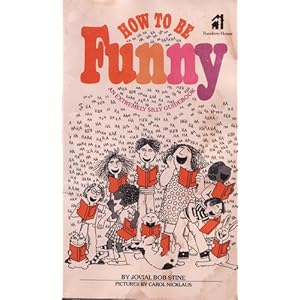
His debut book, How to Be Funny, followed in 1978—under the name “Jovial Bob Stine.” He wore bunny ears to his first signing.
At a fateful lunch with Stine’s Scholastic friend, Jean Feiwel, she asked him a simple question: Have you ever thought about writing young adult horror? And she made an equally simple suggestion: Go home and write a book called, Blind Date.
“I said, ‘OK, sure, no problem,’” he recalls.
After he graduated from Ohio State in 1965, he moved to New York City to fulfill his dreams of working for a magazine. He was told to make up interviews with celebrities for fan magazines. So he did—he (faux-)interviewed all the greats, from The Beatles to Diana Ross, and he sharpened both his speed and his imagination in the process.
Following a short time working in the Soft Drink Industry, he was hired by Scholastic, where he’d spend the next 16 years, mastering the art of writing at different grade levels, and presiding over his kids’ humor magazine, Bananas.
His debut book, How to Be Funny, followed in 1978—under the name “Jovial Bob Stine.” He wore bunny ears to his first signing.
At a fateful lunch with Stine’s Scholastic friend, Jean Feiwel, she asked him a simple question: Have you ever thought about writing young adult horror? And she made an equally simple suggestion: Go home and write a book called, Blind Date.
“I said, ‘OK, sure, no problem,’” he recalls.
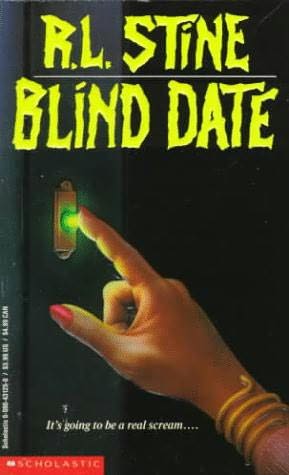 And the amazing thing is—and this is a hint at what makes Stine stand out from millions of other writers, a testament to how much of a born storyteller he truly is—he actually did it. He outlined for a month. He wrote for three. He spent a month revising. He sent it in. It came out in 1986, and became an instant bestseller.
During the writing process, he developed his trademark cliffhanger chapter structure—something he picked up in his humor career. In fact, Stine says the line between humor and horror isn’t all that distinct—horror is like a rollercoaster in which the intention is to laugh and scream simultaneously. And a cliffhanger is a lot like a punch line.
“I think after I came up with that, it was easy,” he says. “Then, it was storytelling.”
More books followed—notably his breakout series, Fear Street (the title just popped into his head, so, of course, he wrote the books to accommodate it). Novels began pouring out of him at a monthly rate.
How’d he match the demand? “Writing is the only thing that ever came easily to me,” he says. “It’s the only thing I’m really competent at. And I never had trouble. I was always confident about it; I could always sit down and write 10 pages. In those days, I could write 20 pages a day.”
And the amazing thing is—and this is a hint at what makes Stine stand out from millions of other writers, a testament to how much of a born storyteller he truly is—he actually did it. He outlined for a month. He wrote for three. He spent a month revising. He sent it in. It came out in 1986, and became an instant bestseller.
During the writing process, he developed his trademark cliffhanger chapter structure—something he picked up in his humor career. In fact, Stine says the line between humor and horror isn’t all that distinct—horror is like a rollercoaster in which the intention is to laugh and scream simultaneously. And a cliffhanger is a lot like a punch line.
“I think after I came up with that, it was easy,” he says. “Then, it was storytelling.”
More books followed—notably his breakout series, Fear Street (the title just popped into his head, so, of course, he wrote the books to accommodate it). Novels began pouring out of him at a monthly rate.
How’d he match the demand? “Writing is the only thing that ever came easily to me,” he says. “It’s the only thing I’m really competent at. And I never had trouble. I was always confident about it; I could always sit down and write 10 pages. In those days, I could write 20 pages a day.”
 He wrote the first Goosebumps book, Welcome to Dead House, in just over a week. It was released in 1992. Two more books followed, to little fanfare. And then kids found it. Readers told readers—the best advertising an author can get.
Many books followed. T-shirts. TV shows. A Goosebumps attraction at Disney World. Overall, he attributes the series’ amazubg success to the fact that it was the first to get equal amounts of female and male readers.
“It was unbelievable for me—you just never dream of having something like that,” he says. “I don’t know if it taught me any lesson; it was just lucky, I think. The only lesson is, you gotta keep at it.”
Stine is still writing. A lot. He’s written about 100 Fear Street books and about 105 Goosebumps. He sits down at 10 a.m. and writes six days a week. He does six new Goosebumps a year, which he has described as “like a vacation,” compared to his previous output. His method?
He wrote the first Goosebumps book, Welcome to Dead House, in just over a week. It was released in 1992. Two more books followed, to little fanfare. And then kids found it. Readers told readers—the best advertising an author can get.
Many books followed. T-shirts. TV shows. A Goosebumps attraction at Disney World. Overall, he attributes the series’ amazubg success to the fact that it was the first to get equal amounts of female and male readers.
“It was unbelievable for me—you just never dream of having something like that,” he says. “I don’t know if it taught me any lesson; it was just lucky, I think. The only lesson is, you gotta keep at it.”
Stine is still writing. A lot. He’s written about 100 Fear Street books and about 105 Goosebumps. He sits down at 10 a.m. and writes six days a week. He does six new Goosebumps a year, which he has described as “like a vacation,” compared to his previous output. His method?
 A Goosebumps manuscript is 120 pages. He has his title. He doesn’t really do research, preferring to work off his imagination. He creates a character list and takes two to four days to outline—extensively (which he says also prevents him from getting writer’s block). The outline has dialogue, every chapter ending, and so on, up to 20 pages. And then, when he returns to the book, all the work is done. He writes 10 pages a day, does a second draft for a couple days, and turns it in. Grand total: About three weeks.
How does he pull it off “I?’m cut out for it,” he says. “I’m cut out for working at home: I don’t get distracted, I’m very disciplined.”
When asked if he’s gotten tired from producing such a massive output for so many years, he laughs.
“No, I still enjoy it. I still look forward to it in the morning. It’s gotten harder to come up with new ideas. It’s more challenging: new kinds of scares, new chapter endings …”
Of course, while writing may seem like the only thing Stine does, he lives a normal life in his beloved New York City home, devoid of the capes and fangs some of his readers expect: He goes to the theater and opera, he walks his dog in the park, he takes vacations.
He says of Goosebumps:
"I love it. It’s a wonderful thing. I feel so lucky. I would never resent it in any way. I’ll always be Goosebumps Author R.L. Stine. I’ll always be called that. Always.”
A Goosebumps manuscript is 120 pages. He has his title. He doesn’t really do research, preferring to work off his imagination. He creates a character list and takes two to four days to outline—extensively (which he says also prevents him from getting writer’s block). The outline has dialogue, every chapter ending, and so on, up to 20 pages. And then, when he returns to the book, all the work is done. He writes 10 pages a day, does a second draft for a couple days, and turns it in. Grand total: About three weeks.
How does he pull it off “I?’m cut out for it,” he says. “I’m cut out for working at home: I don’t get distracted, I’m very disciplined.”
When asked if he’s gotten tired from producing such a massive output for so many years, he laughs.
“No, I still enjoy it. I still look forward to it in the morning. It’s gotten harder to come up with new ideas. It’s more challenging: new kinds of scares, new chapter endings …”
Of course, while writing may seem like the only thing Stine does, he lives a normal life in his beloved New York City home, devoid of the capes and fangs some of his readers expect: He goes to the theater and opera, he walks his dog in the park, he takes vacations.
He says of Goosebumps:
"I love it. It’s a wonderful thing. I feel so lucky. I would never resent it in any way. I’ll always be Goosebumps Author R.L. Stine. I’ll always be called that. Always.”

