Wednesday, March 20, 2013

Illinois Reading Council Conference, 2013-A Rich Experience

All I can say is wow!  The Illinois Reading Council Conference organizers outdid themselves this time.  Each year I look forward to the conference held in Springfield, Illinois each mid-March.  But this time, it was a true embarrassment of riches.

During this annual event, nearly three thousand teachers, librarians, authors, publisher representatives and others gather for what is always guaranteed to be a rich and meaningful experience.  Last week was no exception.  The list of keynote speakers reads like a who's-who of authors and illustrators that influence children the world over. 
head shot of Avi
Avi

Avi has written over sixty books for children in his varied career.  He is at work on another novel for kids.

Pam Muroz Ryan
Pam Muroz Ryan is the author of more that thirty books for young readers, including four novels, Riding Freedom, Esperanza Rising, Becoming Naomi León, and Paint the Wind, along with countless accolades, the Pura Belpré Medal, the Jane Addams Award, and the Schneider Family Award.

 Eric Rohmann is an author/illustrator who won the Caldecott Award for his illustrations of the book My Friend Rabbit..  Eric has created book jackets for a number of novels, including His Dark Materials, by Philip Pullman.

Nancy Stewart and Eric Rohmann
 He won a Caldecott Honor Book award for Time Flies. Eric has written four children's books: My Friend Rabbit, The Cinder-Eyed Cats, Pumpkinhead, and A Kitten's Tale.

For four different books published 1975 to 1980, Katherine Paterson won two Newbery Medals and two National Book Awards. She is one of three people to win the two major international awards: for "lasting contribution to children's literature" she won the biennial Hans Christian Andersen Award for Writing in 1998.  
  
Nancy Stewart and Katherine Paterson
 For her career contribution to "children's and young adult literature in the broadest sense", she won the Astrid Lindgren Memorial Award from the Swedish Arts Council in 2006, the biggest prize in children's literature.  In 2013, Paterson won the Laura Ingalls Wilder Medal from the American Library Association.

These luminaries are but a few of the artists that can be found at the IRC conference each year.  It is entertaining, academic and uplifting.  Thank you, Ilinois Reading Council!

Sunday, March 17, 2013

Chapter Book Series-A Great Tool to Teach Your Students!

I have just finished attending the Illinois Reading Council Conference in Springfield, IL.  It was a glorious three days, filled with wonderful speakers, fresh ideas and inspiring authors.  

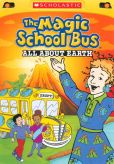
Magic School Bus: All About EarthMy presentation this year was titled The Magic of Using Chapter Books Series in Your Classroom.  It was fun and rewarding to put together and present.  Below are a few of the books I showcased within my power point.  I hope you enjoy the selection.

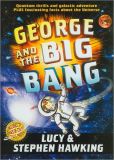
George and the Big BangThe Magic School Bus series is fun for elementary age school kids.  It deals with several topics, including science made fun.  The books cover germs, magnetism, space, bats, bones, sharks and more.

The Stephen and Lucy Hawking Books area a terrific science series as well.  Physicist Stephen Hawking and his daughter Lucy have written some adventure stories for children. They are based around a character named George. The books are probably best for 3rd grade to 8th grade readers. 

 In these books, kids will be exposed to scientific concepts about physics, space and the universe. The books are George's Secret Key to the Universe, George's Cosmic Treasure Hunt, and George and the Big Bang.

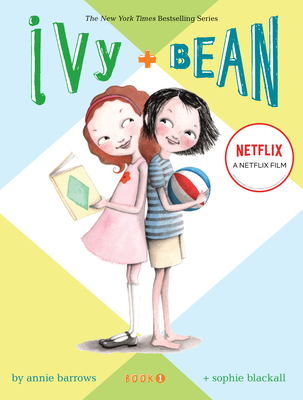
  The Ivy and Bean series by Annie Barrows is a favorite of the younger elementary school crowd.   This imaginative series features two little girls who  are so different but prove that sometimes the best of friends are people never meant to like each other.

Andrew Lost, Books 1--4
Andrew Lost by J. C. Greenburg is a series of chapter books that is appropriate for all elementary school ages. The books follow the adventures of a young scientist named Andrew, his cousin Judy and his robot Thudd.  


Wednesday, March 13, 2013

A Life Lesson Relearned

This past Friday evening my husband and I attended The Follies, a musical, produced every two years.  It was performed by owners of the Sea Towers Condos in Madeira Beach, Florida.  We had been invited by our dear friends of more that twenty years, Ed and Michele Elliott.

Be sure to hear the song sung at the LA production of la Cage at the bottom of this post...

I would be less than honest that we went with mixed feelings.  The condo complex, a huge one with literally thousands of residents, is a fifty-five years or older one with many people in their eighties and even older.  Even though Michele, who is a terrific pianist, was playing and Ed was the narrator--a job tailor made for him--we did not expect much in the way of entertainment.

As the production began, it was evident that the musical offerings were uneven.  Some were quite good.  Some not so much.  But something happened as we sat there listening.  There was a spirit alive in the room that became more evident as the evening went on.  These people were singing their hearts out and having a wonderful time.  It was infectious, and soon we were having fun!
Ed Elliott in Kilt

The finale, though, was the pièce de résistance.  The company chose the song The Best of Times written by Jerry Herman from La Cage aux Folles, and it was perfect!  I was touched in a way I wouldn't have thought possible.  Here were these performers, many in the most golden of their golden years, belting out a song of endless possibilities.  Of joy and hopefulness.  Of looking ever forward and embracing the future.  What are the lyrics one may ask?  I've included a You Tube video of an LA performance here and hope you will appreciate their message as well.

As we listen, let's salute the Sea Tower citizens and all others who approach and live these golden days with verve, vigor and vitality!

Sunday, March 10, 2013

Sproutkin-The Nexflix of Kids' Books?


sproutkin.jpg

 Is there something new under the sun?  The answer could be yes.  Take a look at this terrific  new service for little ones--and their parents, too!   Sproutkin, dubbed the “Netflix for children’s books,” is a newly launched subscription service to help parents who are running out of fresh books to read their children.


The subscription costs $24.99 a month and consists of a monthly “Sproutkit,” a box of 10 books centered on a specific theme accompanied by a “Sproutcard” that offers activities and discussion questions relating to the books and theme.

Kits for toddlers (ages 0-3) come with the exciting bonus of a toy “tailored to help grow your little one’s mind,” according to the company’s website.

The company was founded Raelyn Bleharski — along with Alda Dennis and Mark Jen — who says she was inspired by personal need.  “I have every word of ‘The Very Hungry Caterpillar’ memorized,” Bleharski, mother of two children, said on her blog. “Perhaps this is because I’ve read it at least 300 times. Or perhaps this is because, to date, I have received 7 copies of the book.”

Now, if only someone would just create the same thing for adult books . .
Authors are helping Sandy Hook, Connecticut residents according to Publishers Weekly.  Children’s author Patricia MacLachlan is writing a picture book she says she was inspired to create after speaking with an illustrator friend, Steven Kellogg, who has lived for decades with his family in the Sandy Hook section of Newtown.

MacLachlan, the author of Sarah, Plain and Tall, is a friend of illustrator Steven Kellogg, a long time resident of Sandy Hook.  

The book, called “Snowflakes Fall,” uses the title object to discuss themes like the differences among individuals and how time can heal. In Ms. MacLachlan's words:

I wrote this book after my dear friend Steven Kellogg told me of his sadness and concern for his community, and children everywhere,” the author told Publishers Weekly. “This is a sadness that the world felt, and that I felt too. What brought us comfort was the idea of renewal and memory and, while writing every word, I thought about all children touched by loss.

Patricia MacLachlin and Nancy Stewart
Illinois Reading Council Conference
March, 2012

Mr. Kellogg said:

It is my hope that this book will celebrate the laughter, the playful high spirits, and the uniqueness of the children of Sandy Hook, and of children everywhere. 

The book will be released by Random House Children’s Books this coming fall. The imprint of Random House will, together with Random House, make donations to an organization of MacLachlan and Kellogg’s selection that benefits Sandy Hook victims as well as to a yet-to-be-decided national organization that centers on children.


The Case for Chapter Books


I dedicate a large section of my classroom library to series books. Even when I place the same series books into my leveled baskets, my students are far less likely to pick up that book. I don’t know exactly why, but I find that my students always gravitate towards the series baskets.
To get my students hooked on a particular series, I often begin a series with the entire class as a read-aloud. Other times, I introduce a series with a guided reading group or book club. For instance, after I began reading the tale of the vampire rabbit Bunnicula to my class, over half my students begged me to add the rest of the series to our library. They were already “friends” with the characters, and I had prepared them for the challenges of reading this series (mainly the vocabulary) during my interactive read-alouds.
Some children suffer acute withdrawal upon finishing a beloved series. I had one student who simply stopped reading altogether when she got to the last Little House novel. She explained to me that she didn’t want the series to end — that she’d miss Laura too much. We need to be sensitive to our students’ reading needs and anxieties as they finish up a series. Some students experience their first success as fluent chapter book readers with series books, and they may unconsciously worry about finding other books they can succeed with. It’s crucial to help them find another engrossing book or series to tackle. (It turned out that Caddie Woodlawn was just the book this student needed to help her say “good-bye for now” to Laura.) 
When I have several students reading one series, I’ll often create another basket in the library labeled “If you love [Insert Series Title], you might also like . . . ” For example, for students who love the Ivy and Bean series, I’ll put a basket next to it with books from the Clementine series, the Mallory series, and the Babysitters Club series. Scholastic’s BookAlike feature in their Book Wizard is particularly helpful in finding next-book suggestions for students who are in limbo.
Be on the lookout for students who get “stuck” in a particular series. Some students truly need to read every Magic Tree House book, but other students may stick with the series even after they have outgrown it. Other students bounce back to series that they’ve previously read because they want to relive their “glory days.” Thankfully, some favorite early-series authors like Ron Roy and Debbie Dadey write more than one series, which can make for an easy transition for stuck series readers. However, when one of my students logged her twenty-fifth Boxcar Children book, I had to stage a mini-intervention, my own childhood copy of Nancy Drew in hand to tempt her. Two teaching guides, for grades 2–3 and grades 4–5, have suggestions for “gateway books” to help students transition out of a series. 

Wednesday, March 6, 2013

Write Only About What You Know? Not So Fast!

Yes, yes, I've heard that axiom before, usually from people who can't get away from safe advice.  It can be shortsighted if one adheres to such a regimen throughout a whole writing career.


I can see where, as a new author, it makes sense to take that truism to heart.  After all, the story we are going to tell is safe, predictable and keeps us within our comfort zone.  I've been there myself.  But after that first manuscript becomes a book, it's time to stretch and reach out of that pattern of coziness and reach for the stars.

So how does one go about becoming authentic and delivering a "you had to be there" or you had to experience that?"  Research.  And more research.  It is important to use, if possible, primary sources as well as sources from different points of view.  A good thing can happen from that.

Something new and exciting may swirl around in your brain.  New possibilities.  New characters.  New roads.  And new journeys.  When that happens, magic occurs. We learn to have faith in our characters and to enter their worlds, well and truly enter.  It becomes one of those "you must have experienced it" moments for an author to hear from a fan.

And what can come from all this newness?  Self-knowledge, truth, a deeper delving into the human condition.  And a clearer understanding of ourselves.  After all, when we write, part comes from our souls, our experience, our psyche. 

Does that then mean we are back to writing about what we know?  Part of it, certainly, as we are a sum of our infinite parts.  But it's the journey, a studied journey, an educated journey born of solid research coupled with that indefinable kernel of originality within all of us.   

Happy researching.  And writing.  And discovering as you go.

Monday, March 4, 2013

So You Want to Write a Book?


So you think you'll write a book. Okay. It's a good aspiration. I have but one modest suggestion at the outset: Be sure that's what you really want to do, as writing that book can be bad for your health--physically and emotionally--if you're not ready or willing to do what it takes.  What does it take? From my viewpoint, it takes the perseverance of a marathon runner, the patience of a saint and the perspective of an octogenarian at least. 

First, let's get an idea. You know, that new slant, brilliant twist, blockbuster worthy, light bulb busting aha?
Now comes the research. Let's see if your topic's been done before. No? Great! Let's get on with the real research. Get those stats correct. Be sure the geography is right. Don't make a mistake with history, for heaven's sake.
Got all that in place? Great. Now it's time to wait for your muse to visit. Did I mention, wait? Oh, yes. This is a being that delights in calling the shots, usually later rather than sooner. But finally, she's come calling to accompany you through the morass of story building.
You settle in for a lovely literary liaison with her. And things go so well! That first draft of your manuscript is finished. You are so proud. So happy. So fulfilled.
Then it's time to visit your critique group. Didn't I mention your critique group? Silly me. You must have one. No, no, no to writing in a vacuum. But not to worry. You have produced a masterpiece, and everyone there will sing your praises and cast literary lilies at your feet.
Yeah. Right. They tear it to shreds. Nothing left but your title, and half of them hated that. They say things like, "What point of view? You don't have a point of view." Or perhaps, "These characters are so shallow, I can see right through them." You know. Helpful comments.
Home you slog in a huff, manuscript still too hot to handle from all the vitriol spewed upon it.
Next morning, you take up your quill, open the hateful pages with your fellow authors' marks covering them--and learn! Waddya know? Huh. Their ideas aren't half bad. And you summon your muse back and begin again.
Now emerges the fun part.What is it, you ask? Two words, with an article between: Agent or publisher. Research revisited. Yep. Gotta see who matches whom, as in: "Why did this agent reject my book? Yes, she's known for Romance Novels, but surely she cannot resist my concept book." Have another think about that...
But, hey, miracles still happen (think George Bailey), and a publisher wants your book. That's terrific. You're gonna make millions and fast, too. Why, it'll only take--how long? Two years! I could be dead by then. What's that? It'll be published postumously? Swell.
And so it goes. But, then again. There's something wonderous, delicious, stupendous about writing that manuscript, polishing that manuscript, shining that manuscript that I would not miss for the world.

Sunday, March 3, 2013

Children's Author Patricia MacLachlan Honors Newtown Residents with New Book


Authors are helping Sandy Hook, Connecticut residents according to Publishers Weekly.  Children’s author Patricia MacLachlan is writing a picture book she says she was inspired to create after speaking with an illustrator friend, Steven Kellogg, who has lived for decades with his family in the Sandy Hook section of Newtown.
 
Patricia MacLachlan

MacLachlan, who is the author of the book Sarah, Plain and Tall, among others, is friends with illustrator Steven Kellogg a resident of Sandy Hook for many years.

The book, called Snowflakes Fall, uses the title object to discuss themes like the differences among individuals and how time can heal. In Ms. MacLachlan's words:

I wrote this book after my dear friend Steven Kellogg told me of his sadness and concern for his community, and children everywhere,” the author told Publishers Weekly. “This is a sadness that the world felt, and that I felt too. What brought us comfort was the idea of renewal and memory and, while writing every word, I thought about all children touched by loss.

Patricia MacLachlin and Nancy Stewart
Illinois Reading Council Conference
March, 2012

Mr. Kellogg said:

It is my hope that this book will celebrate the laughter, the playful high spirits, and the uniqueness of the children of Sandy Hook, and of children everywhere. 

The book will be released by Random House Children’s Books this coming fall. The imprint of Random House will, together with Random House, make donations to an organization of MacLachlan and Kellogg’s selection that benefits Sandy Hook victims as well as to a yet-to-be-decided national organization that centers on children.


Wednesday, February 27, 2013

Happy Birthday, Dr. Seuss!

Who in the world doesn't know Dr. Seuss?  He had much to recommend him.  Born Theodor Seuss Geisel on March 2, 1904, he was an American poet, writer and cartoonist.   He  published 46 children's books.

Read Across America was created by the National Education Association to celebrate the birthday of Dr. Seuss, and this year it will be held on March 2, 2013.  

Libraries, book stores all across the United States will hold celebrations by reading his books, holding book talks and giving opportunities to buy them.

At the time of his death on September 24, 1991, Ted had written and illustrated 44 children's books, including such all-time favorites as Green Eggs and Ham, Oh, the Places You'll Go, Fox in Socks, and How the Grinch Stole Christmas. His books had been translated into more than 15 languages. Over 200 million copies had found their way into homes and hearts around the world.

Besides the books, his works have provided the source for eleven children's television specials, a Broadway musical and a feature-length motion picture. Other major motion pictures are on the way.  His honors included two Academy awards, two Emmy awards, a Peabody Award and the Pulitzer Prize.


Most of all, though, Dr. Seuss  is remembered for his magic.  The magic of making kids smile.  The magic of teaching kids to love reading.  The magic of opening kids' minds to creativity.  Thank you Dr. Seuss for all you did and still do for children all over the world.

Oh, and Happy Birthday, Dr. Seuss!

Sunday, February 24, 2013

Fun New Children's Book With An Unusual Twist

His fingernails and teeth are too long. He is the topic of folk lore and village legends. He loves the night and the creatures who wander. He is a Nosferatu, and his name is Vladimir. Will this book called Vlad The Vegetable Juice Drinking Forklift Driving Nosferatu be the ultimate in dark fantasy too?
The storyline, written by Victoria and Michael Kelley, is still based in folk lore and a particular village near the Carpathian Mountains in Romania. It is true to the history of the Dracula legend in many ways. The original look of a Nosferatu is all there. The older man with the long fingernails, two front pointed teeth and a bald head make this character Vlad a real Nosferatu in appearance.

The character Vlad cannot remember where he came from or if he was ever a child himself. However he knows that drinking vegetable juice is all the nourishment he needs. Children are not Vlad's victims in this story but rather they are loved and cared for. The children are part of the secret in keeping Vlad's heart from darkness. He is a real anti-hero and the children love this peculiar old man with the pale skin.

 Unlike other vampires in a traditional storyline which involves consuming human blood, the Vlad in this story is a genius at creating mechanical inventions. He doesn't live in a dark castle, rather he is the owner of a toy shop. Vlad's passion for creating new inventions and toys, make both children and adults happy.

There are also totally unique and unusual characters in the book, who are introduced into children's lives through Vlad. They are called Disgusting Babies and there is a mystery surrounding these little insect type creatures too. They travel with Vlad where ever he goes and only his children are privileged to see or even know about them.

According to the authors there will be a series of Vlad books coming out.  They have a host of ideas for the disgusting babies and Vlad's adventures. These ideas and concepts involve writing about real towns across America and other parts of the world to help promote all kinds of people.  You may want to take a look at the Chronicles Of Vladimir website to learn more.

Thursday, February 21, 2013

LINCOLN'S GETTYSBURG ADDRESS

As Abraham Lincoln's birthday was on February 12, let's look at a new book celebrating his most famous speech, The Gettysburg Address.

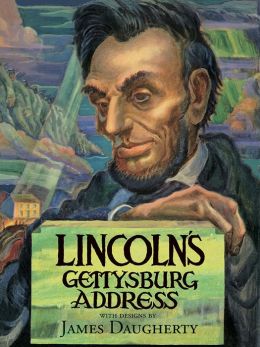
Lincoln's Gettysburg AddressPresident Lincoln delivered the Gettysburg Address 150 years ago, in late 1863; the text of that speech formed the basis for this picture book from James Daugherty, a Newbery-winning illustrator, which was first published in 1947.

The book opens with Daugherty’s original foreword, as well as the address in its entirety, before moving on to 15 paintings that depict
 muscled pioneers settling the American West, the bloody toll of the Civil War, and events well beyond Lincoln’s time, up through WWII.
The images have the heroic feel of WPA posters, as people from all backgrounds and ethnicities join together to embrace the hope and promise embodied in Lincoln’s speech. An afterword by Civil War scholar Gabor Boritt is new to this edition, as are brief guides to each painting.

KIRKUS REVIEW

Only a few presidential quotes or speeches have outlasted the test of time, and Lincoln’s Gettysburg Address is probably the most famous and most significant.

Originally published in 1947, this pictorial version has been updated with a new afterword by Gabor Boritt, a Civil War scholar, in time for the 150th anniversary of the speech. The original illustrations by Daugherty are brightly hued and hewn and dramatize the 15 sentences of Lincoln’s speech with great vigor in a style evocative of Depression-era WPA murals.

Abraham Lincoln, U.S. President. Seated portrait, facing right by Anthony Berger in 1864 In another picture-book depiction, Michael McCurdy’s black-and-white engravings (1995) contrast sharply and are forcefully composed, alternating between the action of battle and the quiet artifacts left behind. 

Daugherty’s heroic tableaux attack the emotions with highly symbolic imagery. “A new nation conceived in liberty” depicts two men, black and white, raising a flag while another white man unshackles a beaten, scarred slave; on the right, a woman, her children and her frontiersman husband look on; above all, a bald eagle flies into the sun. 

It is my hope some of you will take a look at this worthy book for children.  President Lincoln has long been a role model for people of all ages and of many nationalities as well.

Monday, February 18, 2013

New Children's Book on the Old City of David


A new historical fiction book for kids hopes to bring the story of Old Jerusalem to kids who are just starting to read.

Danny Publishers
 Several books about the Old City and the Jewish roots of Jerusalem are in the works, with one book, called An Adventure in the City of David, already on bookshelves.

The book, in easy Hebrew, is geared for the kindergarten crowd, but adults have been seen reading it as well, say its publishers, Danny Publishing. The book, by Aharon Horowitz, tells the story of the City of David, the area outside the Old City that was first built by King David. The area is rich in archaeological detail, and the book is an attempt to bring this history to young children.

The book revolves around Ori, who, together with his archaeologist uncle, goes on a time-capsule adventure in the neighborhood, uncovering discoveries about the wars, communities, kings, and daily life of the City of David throughout the ages.

The  book is illustrated with rich, deep colors, and includes time lines, easy to understand explanations of difficult concepts, and inviting graphics.

It also includes information about the Old City walls, ancient Hebrew script, and archaeological sites. The drawings are based on historic photos and documents of the area.
The book is currently available only in Hebrew, but the publishers say they are considering an English-language edition as well, if demand justifies it.