Sunday, March 10, 2013

Authors are helping Sandy Hook, Connecticut residents according to Publishers Weekly.  Children’s author Patricia MacLachlan is writing a picture book she says she was inspired to create after speaking with an illustrator friend, Steven Kellogg, who has lived for decades with his family in the Sandy Hook section of Newtown.

MacLachlan, the author of Sarah, Plain and Tall, is a friend of illustrator Steven Kellogg, a long time resident of Sandy Hook.  

The book, called “Snowflakes Fall,” uses the title object to discuss themes like the differences among individuals and how time can heal. In Ms. MacLachlan's words:

I wrote this book after my dear friend Steven Kellogg told me of his sadness and concern for his community, and children everywhere,” the author told Publishers Weekly. “This is a sadness that the world felt, and that I felt too. What brought us comfort was the idea of renewal and memory and, while writing every word, I thought about all children touched by loss.

Patricia MacLachlin and Nancy Stewart
Illinois Reading Council Conference
March, 2012

Mr. Kellogg said:

It is my hope that this book will celebrate the laughter, the playful high spirits, and the uniqueness of the children of Sandy Hook, and of children everywhere. 

The book will be released by Random House Children’s Books this coming fall. The imprint of Random House will, together with Random House, make donations to an organization of MacLachlan and Kellogg’s selection that benefits Sandy Hook victims as well as to a yet-to-be-decided national organization that centers on children.


The Case for Chapter Books


I dedicate a large section of my classroom library to series books. Even when I place the same series books into my leveled baskets, my students are far less likely to pick up that book. I don’t know exactly why, but I find that my students always gravitate towards the series baskets.
To get my students hooked on a particular series, I often begin a series with the entire class as a read-aloud. Other times, I introduce a series with a guided reading group or book club. For instance, after I began reading the tale of the vampire rabbit Bunnicula to my class, over half my students begged me to add the rest of the series to our library. They were already “friends” with the characters, and I had prepared them for the challenges of reading this series (mainly the vocabulary) during my interactive read-alouds.
Some children suffer acute withdrawal upon finishing a beloved series. I had one student who simply stopped reading altogether when she got to the last Little House novel. She explained to me that she didn’t want the series to end — that she’d miss Laura too much. We need to be sensitive to our students’ reading needs and anxieties as they finish up a series. Some students experience their first success as fluent chapter book readers with series books, and they may unconsciously worry about finding other books they can succeed with. It’s crucial to help them find another engrossing book or series to tackle. (It turned out that Caddie Woodlawn was just the book this student needed to help her say “good-bye for now” to Laura.) 
When I have several students reading one series, I’ll often create another basket in the library labeled “If you love [Insert Series Title], you might also like . . . ” For example, for students who love the Ivy and Bean series, I’ll put a basket next to it with books from the Clementine series, the Mallory series, and the Babysitters Club series. Scholastic’s BookAlike feature in their Book Wizard is particularly helpful in finding next-book suggestions for students who are in limbo.
Be on the lookout for students who get “stuck” in a particular series. Some students truly need to read every Magic Tree House book, but other students may stick with the series even after they have outgrown it. Other students bounce back to series that they’ve previously read because they want to relive their “glory days.” Thankfully, some favorite early-series authors like Ron Roy and Debbie Dadey write more than one series, which can make for an easy transition for stuck series readers. However, when one of my students logged her twenty-fifth Boxcar Children book, I had to stage a mini-intervention, my own childhood copy of Nancy Drew in hand to tempt her. Two teaching guides, for grades 23 and grades 45, have suggestions for “gateway books” to help students transition out of a series. 

Wednesday, March 6, 2013

Write Only About What You Know? Not So Fast!

Yes, yes, I've heard that axiom before, usually from people who can't get away from safe advice.  It can be shortsighted if one adheres to such a regimen throughout a whole writing career.


I can see where, as a new author, it makes sense to take that truism to heart.  After all, the story we are going to tell is safe, predictable and keeps us within our comfort zone.  I've been there myself.  But after that first manuscript becomes a book, it's time to stretch and reach out of that pattern of coziness and reach for the stars.

So how does one go about becoming authentic and delivering a "you had to be there" or you had to experience that?"  Research.  And more research.  It is important to use, if possible, primary sources as well as sources from different points of view.  A good thing can happen from that.

Something new and exciting may swirl around in your brain.  New possibilities.  New characters.  New roads.  And new journeys.  When that happens, magic occurs. We learn to have faith in our characters and to enter their worlds, well and truly enter.  It becomes one of those "you must have experienced it" moments for an author to hear from a fan.

And what can come from all this newness?  Self-knowledge, truth, a deeper delving into the human condition.  And a clearer understanding of ourselves.  After all, when we write, part comes from our souls, our experience, our psyche. 

Does that then mean we are back to writing about what we know?  Part of it, certainly, as we are a sum of our infinite parts.  But it's the journey, a studied journey, an educated journey born of solid research coupled with that indefinable kernel of originality within all of us.   

Happy researching.  And writing.  And discovering as you go.

Monday, March 4, 2013

So You Want to Write a Book?


So you think you'll write a book. Okay. It's a good aspiration. I have but one modest suggestion at the outset: Be sure that's what you really want to do, as writing that book can be bad for your health--physically and emotionally--if you're not ready or willing to do what it takes.  What does it take? From my viewpoint, it takes the perseverance of a marathon runner, the patience of a saint and the perspective of an octogenarian at least. 

First, let's get an idea. You know, that new slant, brilliant twist, blockbuster worthy, light bulb busting aha?
Now comes the research. Let's see if your topic's been done before. No? Great! Let's get on with the real research. Get those stats correct. Be sure the geography is right. Don't make a mistake with history, for heaven's sake.
Got all that in place? Great. Now it's time to wait for your muse to visit. Did I mention, wait? Oh, yes. This is a being that delights in calling the shots, usually later rather than sooner. But finally, she's come calling to accompany you through the morass of story building.
You settle in for a lovely literary liaison with her. And things go so well! That first draft of your manuscript is finished. You are so proud. So happy. So fulfilled.
Then it's time to visit your critique group. Didn't I mention your critique group? Silly me. You must have one. No, no, no to writing in a vacuum. But not to worry. You have produced a masterpiece, and everyone there will sing your praises and cast literary lilies at your feet.
Yeah. Right. They tear it to shreds. Nothing left but your title, and half of them hated that. They say things like, "What point of view? You don't have a point of view." Or perhaps, "These characters are so shallow, I can see right through them." You know. Helpful comments.
Home you slog in a huff, manuscript still too hot to handle from all the vitriol spewed upon it.
Next morning, you take up your quill, open the hateful pages with your fellow authors' marks covering them--and learn! Waddya know? Huh. Their ideas aren't half bad. And you summon your muse back and begin again.
Now emerges the fun part.What is it, you ask? Two words, with an article between: Agent or publisher. Research revisited. Yep. Gotta see who matches whom, as in: "Why did this agent reject my book? Yes, she's known for Romance Novels, but surely she cannot resist my concept book." Have another think about that...
But, hey, miracles still happen (think George Bailey), and a publisher wants your book. That's terrific. You're gonna make millions and fast, too. Why, it'll only take--how long? Two years! I could be dead by then. What's that? It'll be published postumously? Swell.
And so it goes. But, then again. There's something wonderous, delicious, stupendous about writing that manuscript, polishing that manuscript, shining that manuscript that I would not miss for the world.

Sunday, March 3, 2013

Children's Author Patricia MacLachlan Honors Newtown Residents with New Book


Authors are helping Sandy Hook, Connecticut residents according to Publishers Weekly.  Children’s author Patricia MacLachlan is writing a picture book she says she was inspired to create after speaking with an illustrator friend, Steven Kellogg, who has lived for decades with his family in the Sandy Hook section of Newtown.
 
Patricia MacLachlan

MacLachlan, who is the author of the book Sarah, Plain and Tall, among others, is friends with illustrator Steven Kellogg a resident of Sandy Hook for many years.

The book, called Snowflakes Fall, uses the title object to discuss themes like the differences among individuals and how time can heal. In Ms. MacLachlan's words:

I wrote this book after my dear friend Steven Kellogg told me of his sadness and concern for his community, and children everywhere,” the author told Publishers Weekly. “This is a sadness that the world felt, and that I felt too. What brought us comfort was the idea of renewal and memory and, while writing every word, I thought about all children touched by loss.

Patricia MacLachlin and Nancy Stewart
Illinois Reading Council Conference
March, 2012

Mr. Kellogg said:

It is my hope that this book will celebrate the laughter, the playful high spirits, and the uniqueness of the children of Sandy Hook, and of children everywhere. 

The book will be released by Random House Children’s Books this coming fall. The imprint of Random House will, together with Random House, make donations to an organization of MacLachlan and Kellogg’s selection that benefits Sandy Hook victims as well as to a yet-to-be-decided national organization that centers on children.


Wednesday, February 27, 2013

Happy Birthday, Dr. Seuss!

Who in the world doesn't know Dr. Seuss?  He had much to recommend him.  Born Theodor Seuss Geisel on March 2, 1904, he was an American poet, writer and cartoonist.   He  published 46 children's books.

Read Across America was created by the National Education Association to celebrate the birthday of Dr. Seuss, and this year it will be held on March 2, 2013.  

Libraries, book stores all across the United States will hold celebrations by reading his books, holding book talks and giving opportunities to buy them.

At the time of his death on September 24, 1991, Ted had written and illustrated 44 children's books, including such all-time favorites as Green Eggs and Ham, Oh, the Places You'll Go, Fox in Socks, and How the Grinch Stole Christmas. His books had been translated into more than 15 languages. Over 200 million copies had found their way into homes and hearts around the world.

Besides the books, his works have provided the source for eleven children's television specials, a Broadway musical and a feature-length motion picture. Other major motion pictures are on the way.  His honors included two Academy awards, two Emmy awards, a Peabody Award and the Pulitzer Prize.


Most of all, though, Dr. Seuss  is remembered for his magic.  The magic of making kids smile.  The magic of teaching kids to love reading.  The magic of opening kids' minds to creativity.  Thank you Dr. Seuss for all you did and still do for children all over the world.

Oh, and Happy Birthday, Dr. Seuss!

Sunday, February 24, 2013

Fun New Children's Book With An Unusual Twist

His fingernails and teeth are too long. He is the topic of folk lore and village legends. He loves the night and the creatures who wander. He is a Nosferatu, and his name is Vladimir. Will this book called Vlad The Vegetable Juice Drinking Forklift Driving Nosferatu be the ultimate in dark fantasy too?
The storyline, written by Victoria and Michael Kelley, is still based in folk lore and a particular village near the Carpathian Mountains in Romania. It is true to the history of the Dracula legend in many ways. The original look of a Nosferatu is all there. The older man with the long fingernails, two front pointed teeth and a bald head make this character Vlad a real Nosferatu in appearance.

The character Vlad cannot remember where he came from or if he was ever a child himself. However he knows that drinking vegetable juice is all the nourishment he needs. Children are not Vlad's victims in this story but rather they are loved and cared for. The children are part of the secret in keeping Vlad's heart from darkness. He is a real anti-hero and the children love this peculiar old man with the pale skin.

 Unlike other vampires in a traditional storyline which involves consuming human blood, the Vlad in this story is a genius at creating mechanical inventions. He doesn't live in a dark castle, rather he is the owner of a toy shop. Vlad's passion for creating new inventions and toys, make both children and adults happy.

There are also totally unique and unusual characters in the book, who are introduced into children's lives through Vlad. They are called Disgusting Babies and there is a mystery surrounding these little insect type creatures too. They travel with Vlad where ever he goes and only his children are privileged to see or even know about them.

According to the authors there will be a series of Vlad books coming out.  They have a host of ideas for the disgusting babies and Vlad's adventures. These ideas and concepts involve writing about real towns across America and other parts of the world to help promote all kinds of people.  You may want to take a look at the Chronicles Of Vladimir website to learn more.

Thursday, February 21, 2013

LINCOLN'S GETTYSBURG ADDRESS

As Abraham Lincoln's birthday was on February 12, let's look at a new book celebrating his most famous speech, The Gettysburg Address.

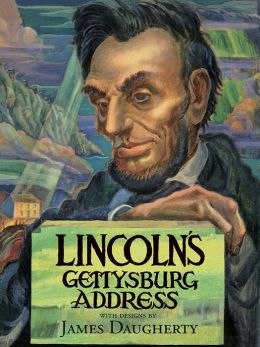
Lincoln's Gettysburg AddressPresident Lincoln delivered the Gettysburg Address 150 years ago, in late 1863; the text of that speech formed the basis for this picture book from James Daugherty, a Newbery-winning illustrator, which was first published in 1947.

The book opens with Daugherty’s original foreword, as well as the address in its entirety, before moving on to 15 paintings that depict
 muscled pioneers settling the American West, the bloody toll of the Civil War, and events well beyond Lincoln’s time, up through WWII.
The images have the heroic feel of WPA posters, as people from all backgrounds and ethnicities join together to embrace the hope and promise embodied in Lincoln’s speech. An afterword by Civil War scholar Gabor Boritt is new to this edition, as are brief guides to each painting.

KIRKUS REVIEW

Only a few presidential quotes or speeches have outlasted the test of time, and Lincoln’s Gettysburg Address is probably the most famous and most significant.

Originally published in 1947, this pictorial version has been updated with a new afterword by Gabor Boritt, a Civil War scholar, in time for the 150th anniversary of the speech. The original illustrations by Daugherty are brightly hued and hewn and dramatize the 15 sentences of Lincoln’s speech with great vigor in a style evocative of Depression-era WPA murals.

Abraham Lincoln, U.S. President. Seated portrait, facing right by Anthony Berger in 1864 In another picture-book depiction, Michael McCurdy’s black-and-white engravings (1995) contrast sharply and are forcefully composed, alternating between the action of battle and the quiet artifacts left behind. 

Daugherty’s heroic tableaux attack the emotions with highly symbolic imagery. “A new nation conceived in liberty” depicts two men, black and white, raising a flag while another white man unshackles a beaten, scarred slave; on the right, a woman, her children and her frontiersman husband look on; above all, a bald eagle flies into the sun. 

It is my hope some of you will take a look at this worthy book for children.  President Lincoln has long been a role model for people of all ages and of many nationalities as well.

Monday, February 18, 2013

New Children's Book on the Old City of David


A new historical fiction book for kids hopes to bring the story of Old Jerusalem to kids who are just starting to read.

Danny Publishers
 Several books about the Old City and the Jewish roots of Jerusalem are in the works, with one book, called An Adventure in the City of David, already on bookshelves.

The book, in easy Hebrew, is geared for the kindergarten crowd, but adults have been seen reading it as well, say its publishers, Danny Publishing. The book, by Aharon Horowitz, tells the story of the City of David, the area outside the Old City that was first built by King David. The area is rich in archaeological detail, and the book is an attempt to bring this history to young children.

The book revolves around Ori, who, together with his archaeologist uncle, goes on a time-capsule adventure in the neighborhood, uncovering discoveries about the wars, communities, kings, and daily life of the City of David throughout the ages.

The  book is illustrated with rich, deep colors, and includes time lines, easy to understand explanations of difficult concepts, and inviting graphics.

It also includes information about the Old City walls, ancient Hebrew script, and archaeological sites. The drawings are based on historic photos and documents of the area.
The book is currently available only in Hebrew, but the publishers say they are considering an English-language edition as well, if demand justifies it.

Thursday, February 14, 2013

The Daily Routines of Famous Writers


What do you do all day?  I am asked this question constantly. While never putting myself in the realm of such authors as Hemingway or de Beauvoir, I thought it might be fun to take a look at the daily routines of famous authors.  Thank you, Maria Papova for the article and Adrienne Evans, for sending it to me!  Let's begin with Ernest Hemingway:

"When I am working on a book or a story I write every morning as soon after first light as possible. There is no one to disturb you and it is cool or cold and you come to your work and warm as you write. You read what you have written and, as you always stop when you know what is going to happen next, you go on from there. You write until you come to a place where you still have your juice and know what will happen next and you stop and try to live through until the next day when you hit it again. You have started at six in the morning, say, and may go on until noon or be through before that. When you stop you are as empty, and at the same time never empty but filling, as when you have made love to someone you love. Nothing can hurt you, nothing can happen, nothing means anything until the next day when you do it again. It is the wait until the next day that is hard to get through."

As for E.B. White:

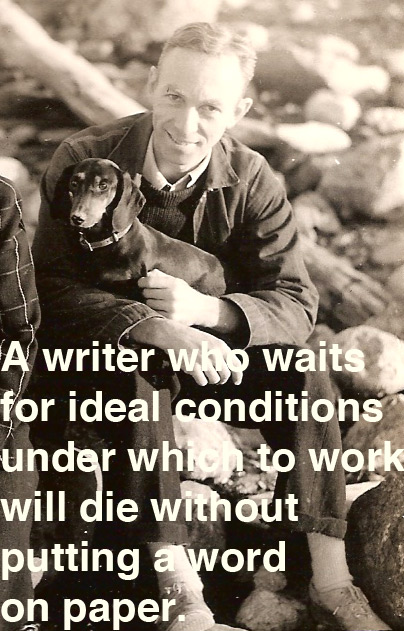
"I never listen to music when I’m working. I haven’t that kind of attentiveness, and I wouldn’t like it at all. On the other hand, I’m able to work fairly well among ordinary distractions. My house has a living room that is at the core of everything that goes on: it is a passageway to the cellar, to the kitchen, to the closet where the phone lives. There’s a lot of traffic. But it’s a bright, cheerful room, and I often use it as a room to write in, despite the carnival that is going on all around me. A girl pushing a carpet sweeper under my typewriter table has never annoyed me particularly, nor has it taken my mind off my work, unless the girl was unusually pretty or unusually clumsy. My wife, thank God, has never been protective of me, as, I am told, the wives of some writers are. In consequence, the members of my household never pay the slightest attention to my being a writing man — they make all the noise and fuss they want to. If I get sick of it, I have places I can go. A writer who waits for ideal conditions under which to work will die without putting a word on paper."

Jack Kerouac  says:

"I had a ritual once of lighting a candle and writing by its light and blowing it out when I was done for the night … also kneeling and praying before starting (I got that from a French movie about George Frideric Handel) … but now I simply hate to write. My superstition? I’m beginning to suspect the full moon. Also I’m hung up on the number nine though I’m told a Piscean like myself should stick to number seven; but I try to do nine touchdowns a day, that is, I stand on my head in the bathroom, on a slipper, and touch the floor nine times with my toe tips, while balanced. This is incidentally more than yoga, it’s an athletic feat, I mean imagine calling me ‘unbalanced’ after that. Frankly I do feel that my mind is going. So another ‘ritual’ as you call it, is to pray to Jesus to preserve my sanity and my energy so I can help my family: that being my paralyzed mother, and my wife, and the ever-present kitties. Okay?  The desk in the room, near the bed, with a good light, midnight till dawn, a drink when you get tired, preferably at home, but if you have no home, make a home out of your hotel room or motel room or pad: peace."
  
And on to Simone de Beauvoir 

"I'm always in a hurry to get going, though in general I dislike starting the day.  I first have tea and then, at about ten o’clock, I get under way and work until one. Then I see my friends and after that, at five o’clock, I go back to work and continue until nine. I have no difficulty in picking up the thread in the afternoon. When you leave, I’ll read the paper or perhaps go shopping. Most often it’s a pleasure to work.

If the work is going well, I spend a quarter or half an hour reading what I wrote the day before, and I make a few corrections. Then I continue from there. In order to pick up the thread I have to read what I’ve done."

And there you have it.  I hope you found this post informative as well as amusing!

Sunday, February 10, 2013

The 500 Hats of Bartholomew Cubbins by Dr. Seuss is Seventy-Five Years Old!

I have a soft spot in my heart for this Dr. Seuss classic.  I used to read it to my students when I taught elementary school.  Have a look at what is happening to the book.

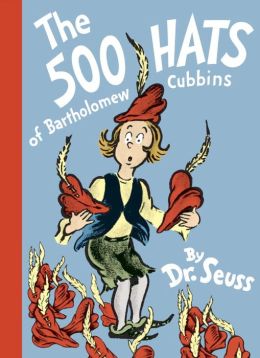
500 Hats of Bartholomew CubbinsAccording to Publishers Weekly, he was a man of many hats, both literally and figuratively. As Dr. Seuss, the prolific children’s author, he wrote 46 books for children, and as Theodor Seuss Geisel, he was an ad man and political cartoonist who collected hats, hats, and more hats – much like the title character in his 1938 classic, The 500 Hats of Bartholomew Cubbins.

In honor of the 75th anniversary of that title, Random House Children’s Books, which has sold 600 million Seuss books in 30 languages and 95 countries, is launching Hats Off to Dr. Seuss!, a yearlong celebration of the good doctor with a focus on some of the issues dear to his heart – children’s literacy and health, and the joy that creativity could bring them.  The commemoration includes several programs in honor of Geisel, who died in 1991 at age 87.

The author had a private collection of hats, said to number in the hundreds.  Geisel began collecting hats in his 20s and was known to wear them – and insist his editors wear them – when in need of inspiration for a word or a character. The star of the show is undoubtedly the tall red-and-white-striped topper sported by the wily feline star of The Cat in the Hat (1957).

In a partnership with Dr. Seuss Enterprises and the Jeff Gordon Children’s Foundation, an organization dedicated to finding a cure for pediatric cancer, Random House will donate Seuss books and Seuss-themed hats to children’s oncology hospitals in the JGCF network.

For its 75th anniversary, The 500 Hats of Bartholomew Cubbins has been converted to full color – the first Seuss title to get such a treatment.

 Originally published in black and white with flashes of red for the hats that magically appear on the title character’s head each time he removes one, the new edition, published in January, now features greens, blues, and yellows. 

It should be a fun read in its new colored state.  A renaissance of sorts for a classic.

Saturday, February 9, 2013

Children's Book Sales Down in September, 2012


Ah, yes.  The book market can be so fickle.  As in the stock market, it rides the waves of public opinion, hunches and word of mouth.  Have a look:

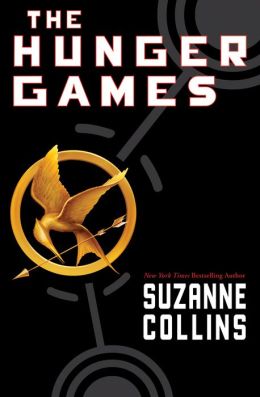
The Hunger Games (Hunger Games Series #1)Overall sales of children’s books were down in September 2012 over the same period in 2011, according to the 21 publishers reporting figures to the AAP.  In September 2011, the category saw estimated total sales of $151.9 million; in September 2012, that number fell to $145.6.

 Paperbacks showed the most significant decline, of almost 17%.   Nielsen BookScan figures suggest one cause – steep declines for the first Hunger Games book (which had been riding high in 2011 in the wake of the film's release.)

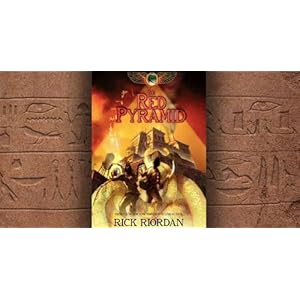
The Red Pyramid (The Kane Chronicles, Book 1)The debut Kane Chronicles title (whose paperback launched with a big splash mid-August 2011) also figured in with a less that stellar continuing performance.

Hardcover sales dipped slightly, by just under 4%, and e-books continue their reign, with a 44.4% jump over last year.

This information came from Publishers Weekly.

Wednesday, February 6, 2013

Guess Who Has Turned 50!


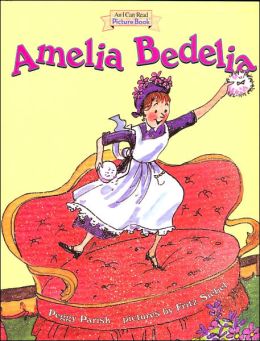
Amelia Bedelia, has turned 50, with new books to celebrate the event!

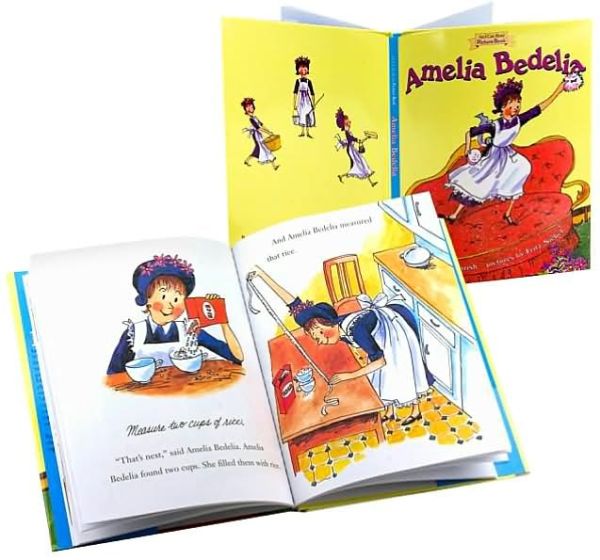
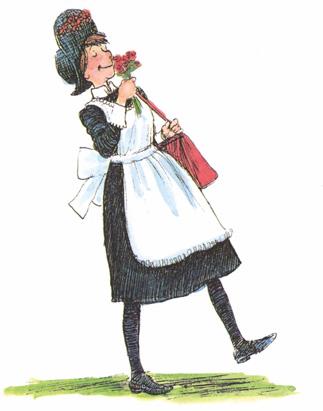
Amelia Bedelia (I Can Read Book Picture Book Series)The late author Peggy Parish wrote the first Amelia Bedelia book in 1963, eventually writing a dozen picture books that chronicled the oh, so literal house maid, who  sketched curtains on a piece of paper when asked to "draw the drapes."

 Greenwillow Books, the book series' publisher, which is a division of Harper Collins, is releasing a 50th anniversary edition of Amelia Bedelia with drawings by the original illustrator Fritz Siebel and a behind-the-scenes look at how the series evolved.
Amelia Bedelia (I Can Read Book Picture Book Series)
What readers may not know is that Peggy Parish's nephew, Herman Parish, has continued where his aunt left off when she died in 1988. Parish, 60, has written 27 Amelia Bedelia titles in all, including the first two Amelia Bedelia chapter books.


"Amelia Bedelia Means Business" and "Amelia Bedelia Unleashed" showcase her character as a young girl.  Usually, publishers release series books one after the other. But that didn't happen with Amelia Bedelia's chapter books.

Amelia Bedelia Through The YearsThey have 160 pages each and mark a new era for the brand, which previously captivated children with 30 or so pages of artful illustrations.

In total, more than 35 million copies of the Amelia Bedelia books have been sold, plus 11 million more through licensing deals with children's publisher Scholastic.

Virginia Duncan, editorial director at Greenwillow, said the staff always looked forward to working on the next Amelia Bedelia book, not just for the character's memorable antics but because she "loves life."

Sunday, February 3, 2013

Using Deep Point of View in Children's Books

I wrote this post last week for my regular guest spot on Donna McDine's wonderful blog, Write What Inspires You.  It is a timely topic in the writing world, so I'm doing a reprise here in case anyone would enjoy reading about this useful technique of getting into one's character's head!

Rivet Your Readers with Deep Point of ViewDeep Point of View?  What is it?  Never heard of it.  But I'd like to know more. 

These are the kinds of answers I get many times when I mention this technique of writing. I thought it just may be time to discuss this effective way of truly getting into one's character's head and staying there.  It's time to give the pesky narrator the boot!  Goodbye, author intrusion.

Deep Point of View, sometimes called Close Third Person, can be used with First Person as well and is a writing style in great demand these days.

The reader climbs into their protagonist's skin—tasting, feeling, hearing, smelling what they do.  Deep POV is a skill that must be learned, like anything else. But the four tips below are a great place to start.
(The before and after examples are from my middle grade manuscript Lost on the Skeleton Coast.)
Tip 1: Delete the phrase "s/he saw"

Obviously not every use of the word saw (observed, noticed, wondered, etc.) will be slashed. But go through your manuscript looking for lines like these:
Olivia smiled at her uncle. She saw that he was really into it now. 
And change to:
Olivia smiled at her uncle. He was really into it now. 
State the action only. Saw always distance the reader. Bring the reader up close instantly.


Tip 2: What words would you say in the manuscript?

Use realistic internal dialogue. What you would say to yourself if you were living the scene, then replace the pronouns with "s/he" (unless you're writing in first person, of course.) 

The Emotion Thesaurus: A Writer's Guide to Character ExpressionExample:   She felt the knife's blade rub her throat.  The metal felt so cold.  She had to stay still and keep from blinking. Olivia was panicked. 
Deep Point of View:  The knife's blade rubbed her throat.  Why was the metal so cold?  Sweat dripped into her eyes, burning them.  What does it feel like to die?

Tip 3: Don't label emotions.

This is classic show vs. tell but is vital to Deep POV. Delete from your mind the name we give to an emotion and force yourself to describe it.  What physical movements would show the emotion without naming it?
Example: Anger 
Olivia was angry.

becomes:   Olivia's eyes became slits. 

Tip 4: Physiological responses

Once you lay out some strong internal dialogue and remove emotion labels, follow up with physiological responses. Depending on the situation, these might be knees buckling, throat clamping, an adrenaline rush, goose bumps, nausea, dizziness, sweating, etc. Describe those. This will really pull the reader deep into the story, particularly in high-intensity moments.
Example:  Excessively hot
Olivia was too hot.
becomes:  If only Olivia could remove the enormous blanket of heat bearing down on her.  Breathing hard, sweat poured from her body and dried quickly.  "We all have to drink, or we're not gonna make it."  A frog's croak.  Was that her voice?
 
I hope this post has encouraged you to throw out all the distance-making words in your manuscript.  Let yourself be invisible.  Allow your protagonist to shine through those pages.  You'll be happy with the results, and so will your readers!