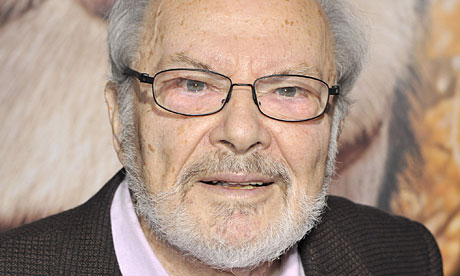
 Speaking to the New York Times, Sendak said that modern children's books are not always "truthful or faithful to what's going on with children."
"If there's anything missing that I've observed over the decades it's that that drive has declined," said the 83-year-old author, who admitted that he "hadn't kept abreast" of children's books and didn't see that many.
"There's a certain passivity, a going back to childhood innocence that I never quite believed in. We remembered childhood as a very passionate, upsetting, silly, comic business." Max, the wolf-suited star of Where the Wild Things Are, "was a little beast, and we're all little beasts," Sendak said.
 Some of Sendak's titles – from his tale of a baby kidnapped by goblins, Outside Over There, to Max's journey to the land of the Wild Things – have provoked controversy. "You mustn't scare parents. And I think with my books, I managed to scare parents," said Sendak. Earlier children's authors "went by the rules that children should be safe and that we adults should be their guardians. I got out of that, and I was considered outlandish. So be it."
The author, who has just published his latest book Bumble-Ardy, the story of a pig who throws his own birthday party which, as ever, "runs against the grain of what's considered a proper childhood", believes there is "no protecting children". After seeing the Holocaust "demolish" his family, he was "very much afraid" when he was a child.
 "I had to bear it even though I didn't have any idea what it meant. What language was there to tell a child? None. That has stayed with me all my life," he told the New York Times. "But all my books end safely. I needed the security in my soul of bringing these children back.
 Ida comes back safe. Max finds his meal waiting for him. It means his mother loves him. The rough patches between them are solved. Mickey gets safely back in bed. We want them to end up OK, and they do end up OK. Unlike grownup books."
 And despite the dangers and the terrors that inhabit his books, Sendak said he had never received a letter from a child which said "Go to hell". Instead, "they are always thanking me for opening the door, even if it was only peeking through to show how difficult life could be," he said. "What I do as best I can is out of a deep respect for children, for how difficult their world is. Yes, there have to be places for safe wonderful stories. It's a big world; it's a big profession. But there should still be crazy people like me."


