Wednesday, August 21, 2013

Lucky's Lick by Mary Esparza-Vela: A Story of Hope

To all children who have been hurt in accidents. 

Never have I begun a book review with the dedication, but I've made an exception this time.  In her dedication, Mary Esparza-Vela author of Lucky's Lick, says it all.

Juanito, a seven year old boy has two new teeth and a desire to explore and have fun in his world.  He has lots of friends and parents who love him.  Juanito is a normal little boy with one exception.  He has been confined to a wheelchair for the past six months. 

While riding his bike, a car struck him, and he suffered a spinal cord injury, one the doctors are not sure will heal.  "Only time will tell if he walks again," the doctors explained to his mom and  dad.  And to Juanito.

While it is not an "everychild" book, enough children are hurt in accidents of all manner across the world, Lucky's Lick is a book aimed to help.  It succeeds.

Ms. Esparza-Vela's book is loaded with sympathy for Juanito, but more importantly, is is brimming over with hope, if not for a recovery then hope that life still has so much to offer.  That kids can overcome and be happy again.  And that maybe reaching outside of themselves, in this case with a new puppy, wonderful things may happen!

I would heartily recommend this hopeful book to children and parents alike.  Life and hope are reflected in the bright colors and busy illustrations by Denis Proulx   They are a perfect foil for the anticipation of a life well lived, no matter the circumstance.

A bit about the author: 

Ms. Esparza-Vela is an award-winning author who lives in Texas with her husband and three sons.  Previously, she worked as an Editorial Assistant in a publications office where her contributions led to monetary awards and selection as Civilian of the Year.  She has written articles for religious publications and has won several online writing contests.  A number of her children's stories were selected for publication by Guardian Angel Publishing, Inc.


Ms. Esparza-Vela can be found at:


Sunday, August 18, 2013

Why do Kids' Books Stay Overwhelmingly White?


When it comes to diversity, children's books are sorely lacking; instead of presenting a representative range of faces, they're overwhelmingly white. How bad is the disconnect?  


A report by the Cooperative Children's Book Center at the University of Wisconsin-Madison found that only 3 percent of children's books are by or about Latinos — even though nearly a quarter of all public school children today are Latino.

When kids are presented with bookshelves that are unbalanced, parents can have a powerful influence. Take 8-year-old Havana Machado, who likes Dr. Seuss and Diary of a Wimpy Kid. At her mothers' insistence, Havana also has lots of books featuring strong Latinas, like Josefina and Marisol from the American Girl Doll books. She says she likes these characters because, with their long, dark hair and olive skin, they look a lot like her.

Only a small fraction of children's books have main characters that are Latino or Native American or black or Asian. And it's been that way for a very long time. In 1965, The Saturday Review ran an article with the headline "The All-White World of Children's Books" — and the topic is still talked about today, nearly 50 years later.
 
Bad News For Outlaws tells the true story of Bass Reeves, an African-American U.S. Marshal in the Old West — shown here disguised as a farmer. The book won a Coretta Scott King award and became one of Lerner Books' best-selling titles.
Do White-centric Books Sell Better?

So why is diversity in children's books such a persistent issue? One theory is that it's all about money. "I think there is a lot of concern and fear that multicultural literature is not going to sell enough to sustain a company," says Megan Schliesman, a librarian with the Cooperative Children's Book Center.

But Schliesman says that belief is a myth — after all, some companies publish multicultural children's books and are profitable. For instance, Lerner Books published the nonfiction picture book Bad News for Outlaws: The Remarkable Life of Bass Reeves, Deputy U. S. Marshal. The book, which told the story of a black lawman in the Old West, won awards, got attention from libraries and independent bookstores and became a best-seller for the company.

"There is an enormous amount of demand for this kind of content from libraries," says Andrew Karre, an editor with Lerner Books. According to Karre, public and school librarians try very hard to put books with a wide range of characters on their shelves.

Why Diverse Book Options Matter

At a San Jose, Calif. library, a young reader browses a shelf of books featuring a variety of main characters: ducks, hens, white kids, black kids. Libraries help drive demand for children's books with nonwhite characters, but book publishers say there aren't enough libraries to make those books best-sellers.Vaunda Micheaux Nelson wrote Bad News For Outlaws, as well as several other books about African-Americans. She is also a librarian at the public library in Rio Rancho, N.M. She says that young people need to see themselves represented on the page so that they will continue reading.

"If they don't see that then perhaps they lose interest," Nelson says. "They don't think there's anything in books about them or for them."

Nelson says she understands that publishers are going to respond to what the market demands. Right now, the vast majority of best-selling children's books are by and about white people. But as the U.S. population changes, Melinda Machado thinks the books American children read will change too.

Publishers might want to catch up a lot sooner, though. According to new data from the Census Bureau, nearly half of today's children under 5 years old are non-white.

Wednesday, August 14, 2013

Partnership Sends Newborns Home With Books

Here is a non-profit organization dedicated to literacy, the earliest literacy of all, beginning at birth.  Read to Grow promotes early literacy and is committed to giving all children a good start in life.

Each of the approximately 700 babies born annually at the Childbirth Center at Griffin Hospital now goes home with a new children’s book, thanks to a partnership between the hospital and the nonprofit organization Read to Grow.

Griffin Hospital recently became one of 12 Connecticut hospitals to adopt Read to Grow’s Books for Babies program. Statewide, Books for Babies reaches 53% of Connecticut newborns and their parents each year.

Zoom CityParents of newborns also receive a literacy guide as part of this joint effort to foster children’s language and early literacy development, and to encourage reading aloud to babies from birth. Recent research suggests that children should be exposed to a language-rich environment from birth, because it can significantly improve cognitive and language development and readiness for school.

 Books for Babies links health to the importance of early literacy, language and attachment, and meets families in the hospital when a baby is born — an innovative approach to preventing future reading and learning difficulties.


Volunteer visits with parents


A trained volunteer visits with parents to introduce the Read to Grow program and talk about the “how and why” of reading aloud to babies.
The volunteers go through the literacy packet and encourage families to register for a Books for Babies follow-up sessions, which will provide them with another new book and literacy information on their child’s 3-month and 12-month birthdays.
Gently-used books are also available for siblings of newborns to promote family reading time.


A literacy resource for families

prgrsvimghttp://ts1.mm.bing.net/th?id=H.4757416141327209&w=98&h=108&c=8&pid=3.1&qlt=90Read to Grow also provides gently-used books to children across the state through its Books for Kids program. Last year, Books for Kids delivered more than 127,000 books into the hands of young children.

“Studies show that in low-income neighborhoods, children often have few, if any books,” said Chet Brodnicki, interim executive director of Read to Grow. “The Valley Council reports that 10% of children residing in the Lower Naugatuck Valley live in poverty. Read to Grow is a resource for these families.”

Visit readtogrow.org for more information.

Monday, August 12, 2013

Pew Survey Points to Power of Print


So we really think the printed word is dead?  If it isn't, it has to be soon?  Take a look at this enticing piece of research from the Pew Research Center then draw your conclusions.

In its last library-related survey, researchers at the Pew Research Center found that Americans ages 16-29 are heavy technology users—no surprise there. The big surprise, however, is that despite their comfort with technology, most young Americans still read and borrow printed books, and value libraries and library services.

“Even in an age of increasing digital resources, those in this under-30 cohort are more likely than older Americans to use and appreciate libraries as physical space—places to study for class, go online, or just hang out,” notes a new Pew report on younger Americans library habits. Large majorities of younger patrons say it is “very important” for libraries to have librarians and books for borrowing, and relatively few think that libraries should automate most library services or move most services online.

Among the findings: almost all those in the 16-29 age group are online, and are more likely than older patrons to use libraries’ computer and internet connections. However, younger Americans are also more likely than older adults to have read a printed book in the past year: 75% of younger Americans have done so, compared with 64% of older adults.

prgrsvimghttp://ts1.mm.bing.net/th?id=H.4820942982676719&w=207&h=207&c=8&pid=3.1&qlt=90This mix of interests is further reflected in younger users’ desires for new library services. Americans ages 16-29 are particularly interested in adding technology-driven features such as apps for accessing library materials and for navigating library spaces, and “Redbox”-style kiosks for convenient access to library materials around town. 

Still, younger Americans, like older adults, think that print books should have a central place at libraries; only 23% strongly support moving some stacks of books out of public areas to create room for things such as technology centers, meeting rooms, and cultural events.

The findings come from data drawn a survey of 2,252 Americans ages 16 and above between October 15 and November 10, 2012 by the Pew Research Center’s Internet & American Life Project. The report is part of a broader effort by the Pew Internet Project to explore the role libraries play in people’s lives and communities. The research is underwritten by the Bill and Melinda Gates Foundation.

Saturday, August 10, 2013

Archie Comic Books? A Horror Series?


Remember Archie? And Veronica? And Betty? I do!  Take a look at what's new in their world.  I think you'll be surprised...


Please view the trailer at the end of this post!

Archie Comics has a new horror series, bringing zombies to Riverdale with Afterlife with Archie.
The first issue will be released on October 9th. Roberto Aguirre-Sacasa wrote the script and artist Francesco Francavilla created the illustrations. 

You can read more at the comic’s special site.  This marks the first time the company has produced a “direct marketing only, NOT for all ages” comic book. 

Who knew?

Wednesday, August 7, 2013

How High School Reading Has Changed Since 1907

I think you'll find this report as fascinating as I did.  How times, and reading offerings, have changed.  It is fair, though, to say that some old faithfuls have remained!

Be sure to see the graph at the bottom of this post.

Renaissance Learning has released its fifth edition of the What Kids Are Reading report. Among the many topics covered in the free report, it compared high school reading across the last century.

Below are links to free eBook copies of the most popular books in 1907, 1923 and 1964. The complete report noted “a decline over time in the complexity of required texts for high school students.” Follow this link for an infographic summary of the research. Here’s more from the report:
Albion High School
Class of 1900
Although our analysis is restricted to the  period of 1907 to 2012, there is evidence that writing has become less complex over the last several hundred  year. Complexity is impacted in part by average sentence length; books with longer sentences tend to be more  difficult to comprehend than books with shorter sentences … it is worth noting that just because the books students are being assigned to read are less complex than in  prior years, this does not necessarily mean that they cannot read or comprehend books at higher levels, nor can  we assume that assigning more complex texts would necessarily lead to improvements in achievement.
Top High School Reading, 1907-2012 with Links to Free Books

1907
Julius Caesar by William Shakespeare
Macbeth by William Shakespeare
Silas Marner by George Eliot

1923
The Rivals: A Comedy by Richard Brinsley Sheridan
Ivanhoe by Sir Walter Scott
Sohrab and Rustum by Matthew Arnold

1964
Macbeth by William Shakespeare
Silas Marner by George Eliot
Julius Caesar by William Shakespeare

2012
To Kill a Mockingbird by Harper Lee
The Crucible by Arthur Miller
Night by Elie Wiesel


Sunday, August 4, 2013

Russian Author Risks Arrest by Releasing Gay Themed Children’s Book


The very month that a law banning "promotion" of homosexuality among children and adolescents came into effect may seem an odd time to publish Russia's first young adult book against anti-LGBT prejudice.  

The Jester's Cap is a children's book daring to defy 'gay propaganda' laws in Russia.  Daria Wilke, author of "The Jester's Cap," told The Moscow News that it was "now or never." Ms. Wilke is risking arrest and a massive fine by releasing the children’s book with gay themes.  

The book is defying laws passed by President Vladimir Putin, which bans the spreading of ‘gay propaganda’ to children.

Daria Wilke’s new book tells the story of a 14-year-old boy named Grisha, who lives and works in a puppet theater with his family and an older gay friend called Sam.

Wilke is not living in Russia, as she emigrated from Moscow 13 years ago to the far more welcoming country of Austria.

russiagayprotest-banner.jpg
Anti-gay protester at Gay Pride Event
St. Petersburg, Russia
June 29, 2013
Photo:  Alexander Demianchuk/Reuters

Speaking to The Atlantic, Wilke said: 

‘I wrote [the book] a year and a half ago, and the publisher was weighing when to release it.  But when these strange laws were being released — first the local anti-gay laws in various cities, then the broader one that passed just last month — eventually the publisher realized that if we didn’t release the book now, we might never be able to.  Because of these laws, in many bookstores, it has an “18+” stamp.

Wilke expects she would be quickly deported if she returned to her home country, but she has not heard from the Russian authorities about her book yet.


‘I haven’t had any bad reactions from the government,’ she said. ‘But then again, the book has only been out a month.'

Thursday, August 1, 2013

What is New Adult Fiction?

An emerging genre, New Adult Fiction is here to stay.  Below is a primer of the genre, complete with free samples of books by leading adult fiction writers. 
 
The label was first used in 2009 when St. Martin’s Press hosted a contest looking for stories that could be marketed to both YA readers and adult readers. The contest described for new adult fiction as books “with protagonists who are slightly older than YA and can appeal to an adult audience.”

Last year, new adult fiction author Cora Carmack landed a three-book deal, bringing the term into a New York Times headline.

To get a definition beyond that simple description, YALitChat.org founder Georgia McBride interviewed JJ, an editorial assistant who worked on the St. Martin’s writing contest. Here’s an excerpt:

There is a gap in the current adult market–the literary fiction market–for fiction about twentysomethings. You never stop growing up, I think, but little in the market seems to address the coming-of-age that also happens in your 20s. This is the time of life when you are an actual, legal adult, but just because you’re able to vote (in the US, anyway) that doesn’t mean you know HOW to be one. This is the first time when you are building a life that is your OWN, away from your parents and the family that raised you. It’s a strange and scary place to be. Just as YA is fiction about discovering who you are as a person, I think NA is fiction about building your own life. (Very generalised, of course.) I hope that the creation of this category will allow the adult market to develop and expand in similar ways the children’s market did.

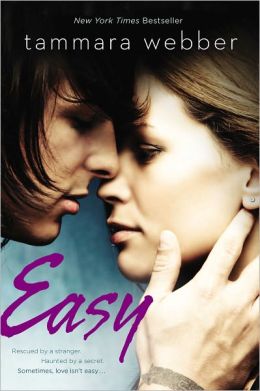
EasyThis is an exciting new genre, reflecting the reading tastes of young people.  With such a large crossover market today, these books will undoubtedly be read by younger as well as older folks as well!

Free Samples of New Adult Fiction Authors Who Landed Book Deals

Losing It by Cora Carmack

Because of Low by Abbi Glines

Slammed by Colleen Hoover

Beautiful Disaster by Jamie McGuire`

Easy by Tammara Webber

Wednesday, July 31, 2013

Gatsby's Grand Adventure by Barbara Cairns is Back Featuring Auguste Renoir's The Apple Seller

If you thought you knew everything there was to know about Auguste Renoir's famous painting The Apple Seller, think again!  Author Barbara Cairns has filled in the picture so to speak with new information. 

 Her new book Gatsby’s Grand Adventures Book 2 Auguste Renoir’s “The Apple Seller (Guardian Angel Publishing) puts a whole new spin on Renoir's luscious work of art.

Cairns gives us a charming art history lesson with a little dollop of magic and help from Gatsby the art galley cat whose greatest joy is jumping into paintings after the museum closes.  This time, however, he may have met his match with Jasper, the dog who lives in the painting.

Barbara Cairns

A bit of caution, though.  In this tale, one must take heed at the sun's rising!  When rays of sunshine appear in the shop, everything stands statue still, including the painting's characters who previously were cavorting all over the canvas. Only Gatsby is free to move, so what will happen now?  Will he be able to return to the painting when night falls and try to rearrange Renoir's brush strokes?  Any child and his/her adult will want to know the outcome, guaranteed.

Ms. Cairns, with the help of well known illustrator, Eugene Rubble, has created an imaginative and playful story that Monsieur Renoir would smile at, I have no doubt!

A bit of confection for children and adults, this book is sure to bring smiles and squeals to the listener and perhaps, the reader.  This book is the second in the Gatsby series, the first called Gatsby's Great Adventure, Book 1, Winslow Homer's "Snap the Whip." 

Each book features a different artist's work.  Also included within the pages is a biography of the artist and several corresponding websites. 

Barbara be reached at:   wordpainter@tampabay.rr.com

Sunday, July 28, 2013

The Snowy Day--A Children’s Book With Black Protagonist on Exhibit

During the height of the civil rights movement, a sweet and gentle book about a black boy in a red snowsuit crunching through the snow, helped break down racial barriers. That book is now the subject of an upcoming exhibit.

Ezra Jack Keats’ beloved 1962 book, “The Snowy Day,” is credited as the first mass-market children’s storybook to feature a black protagonist — a preschooler named Peter who is joyfully exploring the snow-covered sidewalks in his New York City neighborhood.

The National Museum of American Jewish History is presenting a retrospective, “The Snowy Day and the Art of Ezra Jack Keats,” from July 19 to Oct. 20. The exhibit includes more than 70 original works, ranging from preliminary sketches to final paintings and collages.


In this Friday, July 19, 2013 photo, visitors look at books at The Snowy Day and The Art Of Ezra Jack Keats exhibition at the National Museum of American Jewish History, in Philadelphia. The exhibit opened July 19. (AP Photo/Matt Rourke)
 AP Photo/Matt Rourke
“We wanted to marry the strength of the show as an art exhibition with the significance of the book in children’s literature,” museum curator Josh Perelman said. “We really wanted the exhibit spaces to feel alive … to feel like being in a children’s book.”

The son of Jewish immigrants from Poland, Keats was born Jacob Ezra Katz in New York City’s Brooklyn borough in 1916 and grew up in poverty. Artistically gifted but unable to attend art school, he started out working as a sign painter, comic book background illustrator and Works Progress Administration muralist before creating children’s books.

“Keats drew a considerable amount on the fact that he experienced prejudice in his own life and he had a sensitivity to what it felt like to be marginalized,” Perelman said. “He also had a worldview that embraced extending that sensitivity toward other people who may feel marginalized as well.”

Peter’s world was also a reflection of Keats’ own environment, Perelman said, “the city streets where he felt comfortable, where he called home and that happened to be inhabited by working-class and poor folks and by African-American folks.”
“That’s who he felt should be in his books.
 
This isn’t ‘Eloise, he said, referring to the children’s book character who lives in Manhattan’s posh Plaza Hotel with her nanny. “It’s a very different New York City.

Awarded the prestigious Caldecott Medal in 1963, “The Snowy Day” has been published in at least 10 languages. It is on the Library of Congress’ list of “Books That Shaped America” and is rated by teacher and librarian groups as one of the all-time top children’s books.


Ezra Jack Keats
“If you look at children’s literature previous to ‘The Snowy Day,’ there are very few positive examples of publications for African-American children,” Perelman said, “and there’s a whole lot of very derogatory, stereotypical and outright racist material.”

Keats, who died in 1983, illustrated more than 85 books. In six more books after “The Snowy Day,” readers followed Peter growing up from a kindergarten-age boy to an adolescent. His race was never mentioned.

Wednesday, July 24, 2013

Lyrical Children's Book, Kangaroo Clues by Margot Finke


Who sewed the pouch on the Kangaroo
And placed her Joey in there, too?
Was it a Dreamtime spirit-man
Who made up creatures from a plan?


These lovely and lyrical words begin the very special children's book, Kangaroo Clues, by Margot Finke.  The glorious illustrations were done by Mustafa DelioÄŸlu.  The book was published by Guardian Angel Publishing.


The book is told through Australian Aboriginal eyes and tells the story of the Dreamtime, where all things come from and where they go back to when their time on earth is finished.


Aboriginal spirits made all things,
Like kangaroos and birds with wings.
But I’ve a tale that’s just for you.
It tells the secret of Old Man Roo

.

The book conveys a tale of bravery on the kangaroo's part.  Is it true, or is it fable?  No matter.  The story is what counts. The imagery.  The mysticism.  The beauty.  And the dreamlike quality of of the allegory itself.


Perhaps spirits gave Kangaroo some smarts,
Allowing him to lose dogs in watery parts.
I’m told it’s true, so you have a choice—
To believe or not in the Dreamtime’s voice.


This joyous book contains explanatory notes on each page, so the reader is always informed on the text.

Margot Finke is a master story teller, and this time she has outdone herself in the sumptuous work that would be a gorgeous gift for adults as well as for children. And in Margot's Australian words, Well done, Mate!

You may get your hands on Kangaroo Clues and/or more of Margot's wonderful books at:

Barnes and Nobel (no cover yet) : http://tinyurl.com/l27z6n3
 

Sunday, July 21, 2013

You Can't Take the Dinosaur Home With You by Mary Esparza-Vela

On a distant planet, far, far away, lived three young space tots named Kyzzie, the older sister, Sweetz, her middle brother, and Hunee, the baby.

So begins the new children's picture book You Can't Take the Dinosaur Home by Mary Esparza-Vela. The book is published by Guardian Angel Publishing. 

 Even on a different planet in an unknown galaxy, parental and sibling problems are surprisingly the same as here on earth.

Sister and brother are plagued by their baby brother, but he "gave them a hard time.  He liked to wander off on his own and throw temper tantrums when he didn’t get his way."

 If this sounds familiar to you, it's not surprising. Little ones being what they are, cause the same problems whichever planet they inhabit!

To compound things, enter a dinosaur. All manner of problems occur, with baby brother right in the middle of it. 

A darling story, this would be terrific for all your junior space cadets out there.  It is a whimsical tale of life set in outer space but with all the elements of home and family.  


The characters are offered as dolls as well, a great addition to your kids' space needs!

Author Mary Esparza-Vela lives in San Antonio.    Her dream has always been to write for children. She has several books published with Guardian Angel Publishing.  Other writing credits include articles published in Catholic newspapers and a winning entry in a Writer's Digest Competition.  Mary has won a Reader's Favorite Award for Dinosaur.  

**And here is an update!  Mary has just been told by Creative Child Magazine that Dinosaur has won a 2013 Book of the Year Award!  Hearty Congratulations!  More reason for you to run and pick up a copy of You Can't Take the Dinosaur Home With You!
 
Mary's website is: http://luv-beams.com/

The site lists her available books.

Saturday, July 20, 2013

SOUTH Africa is the 2013 Kids' Lit Quiz World Champion


How about this for African power?  The 2013 International  Kids'Lit Quiz was won by 12-year-olds Shreeya Khoosal and Katie Duvenage, and 13-year-olds Jessica Wise and Julia Kinghorn, all of Roedean Junior School, in Johannesburg on July 4.

Shreeya Khoosal loves escaping in the pages of the books she reads
Image by: SUPPLIED
The quiz was held at Durban Girl's College. The quartet of students beat children from New Zealand, Australia, the US, the UK and Canada to take the R6000 prize.

The Kids' Lit Quiz was started in New Zealand in 1991 by Wayne Mills, a lecturer in children's literature at the University of Auckland. It quizzes youngsters on any book in the children's literature genre.


The six teams were asked seven questions in 10 categories, including dystopian novels, folk tales and mythology.

Quiz Master Mills said:

I can see that people here are also blown away by these kids' intellectual prowess. They are well-read and their knowledge extends even to Japanese folk tales, and to literature before their time.

Roedean Junior School librarian Gill Murdoch was surprised that the girls had correctly answered questions they had not covered in their coaching. "That shows how well-read they are. This competition is brilliant because it promotes reading.

"'We hope to win again next year," she said.

Thursday, July 18, 2013

Did Certain Books Creep You Out When You Were a Kid?


Did you have any books that scared you as a kid? I have to admit that I did not.  But here is an interesting video by video blogger Vsauce.  It's called “Why Are Things Creepy?,” exploring the nuances and science of scariness.  Along the way, he cites the great Stephen King and shares a few scary books.


Please see the video at the bottom of this post.


What does it take to make a book scary? Vampires, ghosts, serial killers, zombies, mean parents, all of the above?  Your turn.  Talk to the readers and to me in the comment section. 


Below, is a list of books that scared Vsauce as a kid. Please add your suggestions in the comments section.

Some Books That Scared Us When We Were Kids

1. Scary Stories to Tell in the Dark by Alvin Schwartz
2. The Works of Edgar Allan Poe (read the complete eBook for free)
3. It by Stephen King
4. Fear Street by R.L. Stine
5. Remember Me by Christopher Pike

Sunday, July 14, 2013

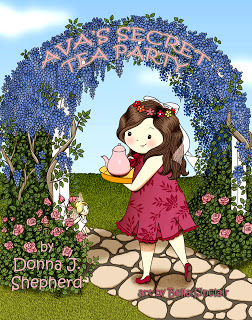
Ava'sSecret Tea Party-A Beautiful, Delicious, Enchanting Book!


Sometimes at night when stars shine bright,
Visitors come to call.
Snuggled in bed and sound asleep,
Ava never sees them at all.


This lovely verse begins the magical children's book Ava's Secret Tea Party, written in true rhyme by Donna Shepherd and brimming with sumptuous illustrations by renowned illustrator, Bella Sinclair. 

This book, as many of Donna's other books, was published by Guardian Angel Publishing.


Ava longs to meet the night time visitors who come and go so secretly and who children never see.  She devises a plan by which she may be able to meet her favorites at a tea party she wants to give. 

Ava leaves a note with an invitation included for Sandman, because he visits her every night. Included in her invitation list are Sandman, Easter Bunny, Tooth Fairy, and Santa. What kind of invitation is it? And does her plan work? Will she meet them as she wishes to do?

One must read the charming book to find the answers, but I can assure you the news is all good!

Donna's talent shines through in this marvelous book. The story is enchanting and will warm every little girl's heart.  Bella Sinclair's illustrations enhance the story to make a joyous experience for the child and her adult reader as well.